The advent of e-commerce has brought about a significant change in the way people shop. Consumers now prefer shopping online due to the convenience, affordability, and availability of a wide range of products. E-commerce has provided an excellent opportunity for businesses to expand their reach and attract new customers. However, with the growth of e-commerce, businesses have to deal with a lot of challenges such as increased competition, rising costs, and the need to provide excellent customer service. E-commerce process automation is a solution that can help businesses tackle these challenges. In this blog, we will explore e-commerce automation and 3 ways e-commerce process automation can cut costs and boost revenue for businesses.
Get Started with Aonflow iPaaS – Free Trial Available!
Build and deploy your integrations at zero cost. No credit card required!
What is E-Commerce automation?
E-commerce automation refers to the use of technology and software to automate various processes involved in running an e-commerce business. These processes include inventory management, order processing, payment processing, shipping, customer service, marketing, and data analysis.
Automation can help businesses save time, reduce costs, and improve efficiency by eliminating manual and repetitive tasks. Automation can also help businesses provide a better shopping experience for customers by providing accurate and timely information, faster processing times, and personalized recommendations.
Examples of e-commerce automation tools and software include:
Inventory Management Systems: These systems can track stock levels in real-time, alert businesses when stocks are running low, and automatically reorder products when needed.
Order Management Systems: These systems can automate the processing of orders, picking, and packing of products, and generate shipping labels automatically.
Payment Processing Systems: These systems can securely process payments from customers, reduce the risk of fraud, and automate the reconciliation of payments.
Shipping and Fulfillment Systems: These systems can compare shipping rates from different carriers, select the most cost-effective option, generate shipping labels automatically, and provide customers with real-time updates on the status of their orders.
Customer Service Systems: These systems can automate responses to frequently asked questions, provide customers with real-time support through chatbots, and send personalized emails to customers.
Marketing Automation Systems: These systems can automate email marketing campaigns, analyze customer data, and provide personalized recommendations to customers based on their purchase history.
Overall, e-commerce automation can help businesses streamline their operations, reduce costs, and provide a better shopping experience for customers.
Why is E-Commerce automation important?
E-commerce automation is important for several reasons. First and foremost, it can help businesses save time and reduce costs. By automating repetitive and manual tasks, businesses can free up their employees’ time to focus on more strategic tasks such as product development, marketing, and customer engagement. This can result in increased productivity and profitability.
Secondly, e-commerce automation can improve the accuracy and efficiency of various processes involved in running an e-commerce business. For example, automated inventory management systems can help businesses avoid stockouts and overstocking, which can result in lost sales or excess inventory costs. Automated order processing systems can reduce the risk of errors and delays in fulfilling orders, leading to higher customer satisfaction and repeat purchases.
Thirdly, e-commerce automation can provide businesses with real-time data and insights that can inform strategic decision-making. For example, marketing automation systems can analyze customer data to identify trends and opportunities and provide personalized recommendations to customers based on their purchase history. This can result in increased sales and customer loyalty.
Finally, e-commerce automation can provide customers with a better shopping experience. By providing accurate and timely information, faster processing times, and personalized recommendations, businesses can increase customer satisfaction and loyalty.
Overall, e-commerce automation is important for businesses to stay competitive in an increasingly crowded market. It can help businesses save time and reduce costs, improve the accuracy and efficiency of various processes, provide real-time data and insights, and provide customers with a better shopping experience.
How does E-Commerce automation work?
E-commerce automation works by leveraging technology and software to automate various processes involved in running an e-commerce business. Here are some examples of how e-commerce automation works in practice:
Inventory Management Automation: Inventory management automation involves the use of software to track stock levels in real-time, alert businesses when stocks are running low, and automatically reorder products when needed. This can help businesses avoid stockouts and overstocking, which can result in lost sales or excess inventory costs.
Order Processing Automation: Order processing automation involves the use of software to automate the processing of orders, picking, and packing of products, and generating shipping labels automatically. This can reduce the risk of errors and delays in fulfilling orders, leading to higher customer satisfaction and repeat purchases.
Payment Processing Automation: Payment processing automation involves the use of software to securely process payments from customers, reduce the risk of fraud, and automate the reconciliation of payments. This can help businesses streamline their payment processes and reduce the risk of financial losses due to fraud.
Shipping and Fulfillment Automation: Shipping and fulfillment automation involves the use of software to compare shipping rates from different carriers, select the most cost-effective option, generate shipping labels automatically, and provide customers with real-time updates on the status of their orders. This can help businesses reduce shipping costs and provide customers with a better shopping experience.
Customer Service Automation: Customer service automation involves the use of software to automate responses to frequently asked questions, provide customers with real-time support through chatbots, and send personalized emails to customers. This can help businesses provide a better customer experience and increase customer loyalty.
Marketing Automation: Marketing automation involves the use of software to automate email marketing campaigns, analyze customer data, and provide personalized recommendations to customers based on their purchase history. This can help businesses increase sales and customer loyalty by providing relevant and timely marketing messages to customers.
Overall, e-commerce automation works by using technology and software to automate various processes involved in running an e-commerce business. This can help businesses save time and reduce costs, improve the accuracy and efficiency of various processes, provide real-time data and insights, and provide customers with a better shopping experience.
E-Commerce automation use cases
There are numerous use cases for e-commerce automation, ranging from streamlining internal operations to improving the customer experience. Here are some examples of how e-commerce automation can be used in practice:
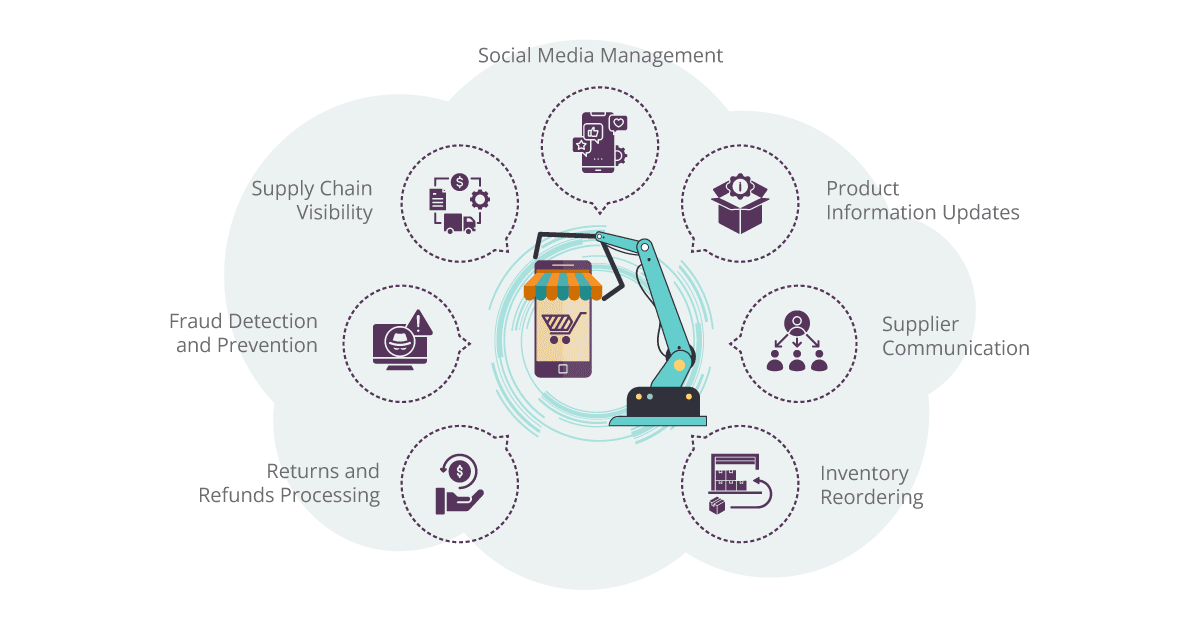
Returns and Refunds Processing: Automate the returns and refunds process to make it more efficient for both customers and the business. This could involve the automated generation of return labels, tracking the status of returned items, and initiating refunds automatically once items are received and inspected.
Personalized Product Recommendations: Use automation to analyze customer browsing and purchase history to provide personalized product recommendations. This can enhance the shopping experience and increase the likelihood of cross-selling and upselling.
Inventory Reordering: Apart from basic inventory management, automation can predict demand trends and reorder products accordingly. This helps in maintaining optimal inventory levels and reducing the likelihood of stockouts.
Dynamic Pricing: Implement automated dynamic pricing based on factors like demand, competitor pricing, and inventory levels. This can help maximize revenue by adjusting prices in real-time.
Fraud Detection and Prevention: Beyond payment processing, automation can be used to identify potentially fraudulent transactions by analyzing patterns and anomalies in customer behavior and transaction data.
Chatbot Customer Engagement: In addition to customer service, use chatbots to engage customers on the website, assisting them in finding products, answering questions, and guiding them through the shopping process.
Supply Chain Visibility: Automate tracking and monitoring of products as they move through the supply chain. This provides transparency to customers and helps optimize logistics.
Social Media Management: Automate social media posting and scheduling to maintain an active online presence, share new product launches, and engage with customers.
Product Information Updates: Automatically update product information, prices, and availability across various sales channels to ensure consistency and accuracy.
Predictive Analytics for Trend Forecasting: Utilize automation to analyze customer data and industry trends, providing insights that can guide future product offerings and marketing strategies.
Abandoned Cart Recovery: Implement automated emails to remind customers about items left in their carts, offering incentives or discounts to encourage them to complete their purchases.
Supplier Communication: Automate communication with suppliers for streamlined order placements, tracking, and receiving updates on product availability.
Post-Purchase Follow-up: Automate post-purchase follow-up emails to gather feedback, encourage reviews, and build stronger relationships with customers.
Localization for International Markets: Automate the translation and localization of product information and marketing materials when expanding to international markets.
A/B Testing: Automate A/B testing of different website layouts, product descriptions, and marketing messages to optimize conversion rates.
By embracing automation in these various aspects of e-commerce operations, businesses can enhance efficiency, and customer satisfaction, and ultimately drive growth.
Aonflow is the leading integration platform.
You can kick-start by integrating your first-ever workflow in just a matter of minutes.
E-Commerce automation steps
Implementing e-commerce automation can seem daunting at first, but breaking it down into manageable steps can make the process more manageable. Here are some steps to consider when implementing e-commerce automation:
Identify Areas for Automation: The first step is to identify which areas of your e-commerce business can benefit from automation. This may include inventory management, order processing, payment processing, shipping and fulfillment, customer service, and marketing. Evaluate your current processes and identify areas that are time-consuming, error-prone, or could be improved by automation.
Research Automation Tools: Once you have identified areas for automation, research tools, and software can help you achieve your automation goals. Look for tools that integrate with your current systems and offer the features you need. Consider factors such as cost, ease of use, and customer support when evaluating automation tools.
Plan Your Automation Strategy: Once you have selected your automation tools, it’s time to plan your automation strategy. This may involve creating workflows, setting up rules and triggers, and configuring the tools to meet your specific needs. Work with your team to ensure that everyone is on the same page and understands the automation strategy.
Implement Automation: Once you have planned your automation strategy, it’s time to implement it. This may involve setting up integrations, configuring workflows, and testing the automation tools to ensure that they are working correctly. It’s important to monitor the automation closely and make adjustments as needed to ensure that it is achieving the desired results.
Train Your Team: As you implement e-commerce automation, it’s important to train your team on how to use the new tools and processes. This may involve providing training materials, conducting training sessions, and offering ongoing support to ensure that everyone is comfortable with the new automation tools.
Monitor and Optimize: Finally, it’s important to monitor the effectiveness of your e-commerce automation and optimize it as needed. This may involve tracking metrics such as sales, customer satisfaction, and operational efficiency, and making adjustments to the automation strategy as needed.
3 ways e-commerce process automation can cut costs and boost revenue for businesses
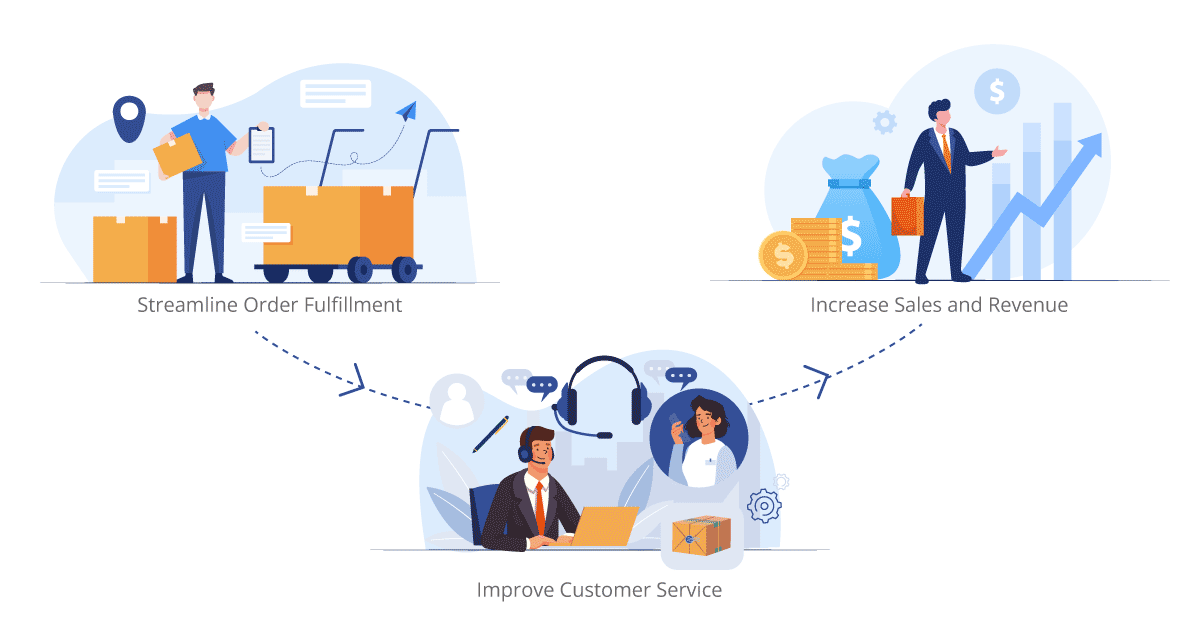
1. Streamline Order Fulfillment
One of the critical components of e-commerce is order fulfillment. This involves processing orders, picking, packing, and shipping products to customers. Manual order fulfillment processes can be time-consuming, prone to errors, and expensive. E-commerce process automation can help streamline order fulfillment and reduce costs significantly.
For instance, businesses can use automated inventory management systems that keep track of stock levels in real-time. These systems can help businesses avoid overstocking, which can lead to the accumulation of excess inventory, storage costs, and losses due to obsolete stock. Additionally, businesses can use order management systems that automate the processing of orders, the picking, and the packing of products. These systems can help reduce errors and speed up the order fulfillment process, allowing businesses to ship products to customers faster.
E-commerce process automation can also help businesses reduce shipping costs. For example, businesses can use automated shipping systems that compare shipping rates from different carriers and select the most cost-effective option. These systems can also generate shipping labels automatically, eliminating the need for manual data entry and reducing the risk of errors.
2. Improve Customer Service
Excellent customer service is essential for any business that wants to retain its customers and attract new ones. E-commerce process automation can help businesses improve their customer service by providing customers with accurate and timely information about their orders.
For instance, businesses can use automated order tracking systems that provide customers with real-time updates on the status of their orders. These systems can send customers email or text notifications when their orders are shipped, out for delivery, or delivered. This can help reduce customer inquiries about the status of their orders, allowing businesses to focus on other aspects of customer service.
E-commerce process automation can also help businesses provide better customer support. For example, businesses can use chatbots that can answer customers’ frequently asked questions quickly and efficiently. Chatbots can provide customers with answers to questions such as product availability, pricing, and shipping options, freeing up customer service representatives to focus on more complex issues.
3. Increase Sales and Revenue
E-commerce process automation can help businesses increase their sales and revenue by providing a seamless shopping experience for customers. Automation can help businesses reduce cart abandonment rates, increase upselling opportunities, and improve customer retention.
For example, businesses can use automated email marketing campaigns that target customers who have abandoned their carts. These campaigns can send personalized emails to customers reminding them of the products they left in their carts and offering them incentives such as discounts or free shipping to complete their purchases.
E-commerce process automation can also help businesses increase upselling opportunities by recommending complementary products to customers based on their purchase history. For instance, if a customer purchases a camera, an automated system can recommend accessories such as lenses, tripods, or memory cards. This can increase the average order value and boost revenue.
Final thoughts
E-commerce automation has become a game-changer for businesses looking to streamline their operations and drive growth. By automating tedious and time-consuming tasks, businesses can free up their valuable time and resources to focus on innovation and providing exceptional customer service.
From inventory management to order processing, payment processing, shipping and fulfillment, customer service, and marketing, e-commerce automation has a wide range of applications that can benefit businesses of all sizes. It not only helps businesses cut costs and increase revenue but also creates a better shopping experience for customers.
However, implementing e-commerce automation is not without its challenges. Businesses must approach it with a well-planned strategy and a clear understanding of the benefits and potential drawbacks. They must identify areas for automation, research and select the appropriate tools, train their team, and monitor and optimize the results to ensure that the automation is achieving the desired outcomes.
As technology continues to evolve, e-commerce automation will become increasingly important for businesses to remain competitive and meet the changing needs of their customers. It’s not just about reducing costs and increasing revenue, but also about creating unique and memorable shopping experiences that keep customers coming back for more.
E-commerce automation is a powerful tool that can help businesses save time, reduce costs, and improve customer satisfaction. Embracing automation and using it to your advantage can help your business gain a competitive edge, drive growth, and create a loyal customer base that will help them thrive in today’s digital marketplace.
Get Started with Aonflow iPaaS – Free Trial Available!
Build and deploy your integrations at zero cost. No credit card required!