
Businesses face the challenge of integrating multiple applications and systems to streamline operations, manage data, and enhance customer experiences in today’s day and age of digitization.
iPaaS emerges as a vital solution, enabling organizations to connect disparate systems and applications seamlessly. In this article, we will explore the future of iPaaS and its potential in shaping the digital world.
Get Started with Aonflow iPaaS – Free Trial Available!
Build and deploy your integrations at zero cost. No credit card required!
The Current State of iPaaS
The iPaaS market has experienced significant growth in recent years, driven by the increasing demand for efficient integration solutions. According to a report by MarketsandMarkets, the iPaaS market is expected to reach $13.9 billion by 2026, with a compound annual growth rate (CAGR) of 30.3% (2021-26). This growth signifies the rising importance of iPaaS in the digital landscape.
iPaaS offers a unified platform for integration, providing numerous benefits. It enables faster time-to-market, increased operational efficiency, reduced costs, and improved scalability. By leveraging pre-built connectors and templates, iPaaS simplifies the integration process, eliminating the need for extensive coding or development efforts.
The Evolving Landscape of iPaaS
As technology continues to advance, iPaaS is evolving to adapt and expand its capabilities. Integration with emerging technologies such as artificial intelligence (AI), the Internet of Things (IoT), and blockchain is becoming increasingly crucial. iPaaS platforms now incorporate AI and machine learning algorithms to automate data mapping, transformation, and validation, making integration processes more efficient and accurate.
Furthermore, the widespread adoption of cloud computing has had a significant impact on iPaaS. Cloud-based services have become the standard for many organizations, providing access to applications and data from anywhere, at any time. iPaaS platforms have evolved to seamlessly integrate with various cloud-based services, enabling organizations to connect on-premises systems with cloud applications and services.
The Role of iPaaS in Digital Transformation
Digital transformation is a top priority for businesses across industries, and iPaaS plays a critical role in enabling this transformation. By providing a robust foundation for data integration and management, iPaaS allows organizations to break down data silos and gain a unified view of their data, leading to better insights and decision-making.
iPaaS also enhances the customer experience by ensuring data consistency across different touchpoints. For instance, by integrating customer relationship management (CRM) systems with marketing automation platforms, iPaaS enables personalized and targeted marketing campaigns based on real-time customer data. This results in improved customer engagement and satisfaction.
Moreover, iPaaS enables organizations to achieve agility and scalability in their operations. With iPaaS, businesses can quickly adapt to changing market needs by easily integrating new applications or services. This flexibility allows organizations to scale their operations without disruptions, ensuring a seamless growth trajectory.
Real-World Use Cases of iPaaS
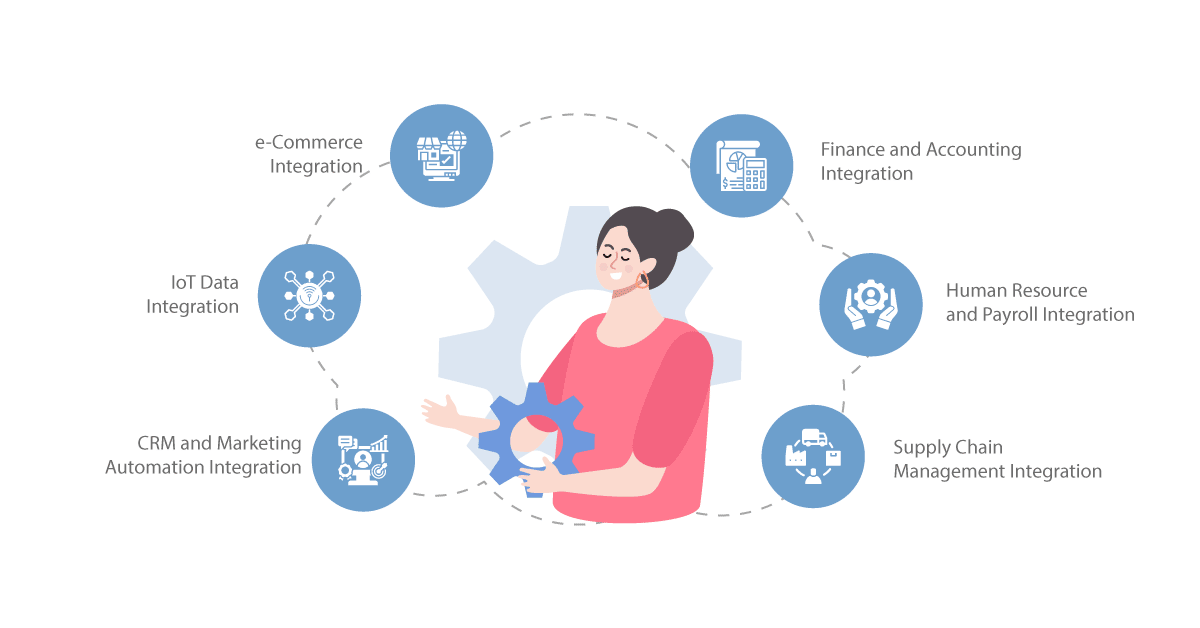
To understand the potential of iPaaS, let’s explore some real-world use cases:
E-commerce integration: A retailer wants to connect their e-commerce platform with their inventory management system, customer relationship management (CRM) system, and logistics providers. With iPaaS, the retailer can achieve real-time synchronization of product details, inventory levels, order information, and customer data. This enables accurate stock availability, streamlined order fulfillment, and personalized customer experiences. For example, when a customer places an order on the e-commerce platform, iPaaS automatically updates the inventory levels, triggers order fulfillment processes, and updates the CRM system with customer information for future marketing and sales efforts.
IoT data integration: A manufacturing company has implemented IoT devices across their production line to monitor equipment performance, collect sensor data, and optimize processes. iPaaS enables seamless integration of data from these IoT devices into their analytics platforms and other systems. By connecting IoT devices with iPaaS, the company can gather real-time data on machine health, production output, energy consumption, and quality metrics. This data integration empowers the manufacturing company to gain valuable insights, detect anomalies, identify bottlenecks, and optimize production processes for increased efficiency and reduced downtime.
CRM and marketing automation integration: A company aims to enhance its lead nurturing and conversion strategies by integrating its CRM system with a marketing automation platform. With iPaaS, the company can synchronize customer data between the CRM and marketing automation systems. This integration enables personalized and targeted marketing campaigns based on customer behavior, preferences, and engagement history. For instance, iPaaS can automatically trigger email campaigns, update customer records with campaign engagement data, and provide real-time insights to sales teams for effective follow-ups. By leveraging iPaaS for CRM and marketing automation integration, the company can improve lead conversion rates, customer engagement, and overall marketing effectiveness.
Finance and accounting integration: A multinational organization operates in multiple countries and uses different financial systems for each region. iPaaS allows the organization to integrate and consolidate financial data from various systems, enabling a unified view of financial performance across the entire organization. iPaaS can automate the exchange of data such as invoices, transactions, and financial reports between systems, eliminating manual data entry and reducing errors. This integration improves financial reporting accuracy, enables efficient financial analysis, and streamlines regulatory compliance across different jurisdictions.
Human resources and payroll integration: An organization wants to streamline its HR processes by integrating its HR management system with payroll software. By leveraging iPaaS, the organization can automate the transfer of employee data, including personal information, attendance records, salary details, and benefits information. This integration ensures data accuracy, reduces manual data entry, and improves payroll processing efficiency. iPaaS enables seamless synchronization between HR and payroll systems, ensuring timely and accurate salary calculations, deductions, tax compliance, and employee benefits administration.
Supply chain management integration: A logistics company operates a complex supply chain involving multiple suppliers, carriers, warehouses, and distribution centers. iPaaS enables end-to-end integration of supply chain management systems, allowing real-time visibility into inventory levels, shipment tracking, and order fulfillment. By connecting systems through iPaaS, the company can optimize inventory management, improve supply chain efficiency, reduce costs, and enhance customer satisfaction. For example, iPaaS can automate the exchange of shipment data, update inventory levels, and provide shipment tracking information to customers through integrated e-commerce platforms or mobile applications.
These real-world use cases demonstrate the versatility of iPaaS in enabling seamless integration across various business domains. Whether it’s e-commerce, IoT, CRM and marketing, finance and accounting, HR and payroll, or supply chain management, iPaaS offers the flexibility and connectivity to optimize processes, improve data accuracy, and enhance overall business performance.
Aonflow is the leading integration platform.
You can kick-start by integrating your first-ever workflow in just a matter of minutes.
The Future of iPaaS
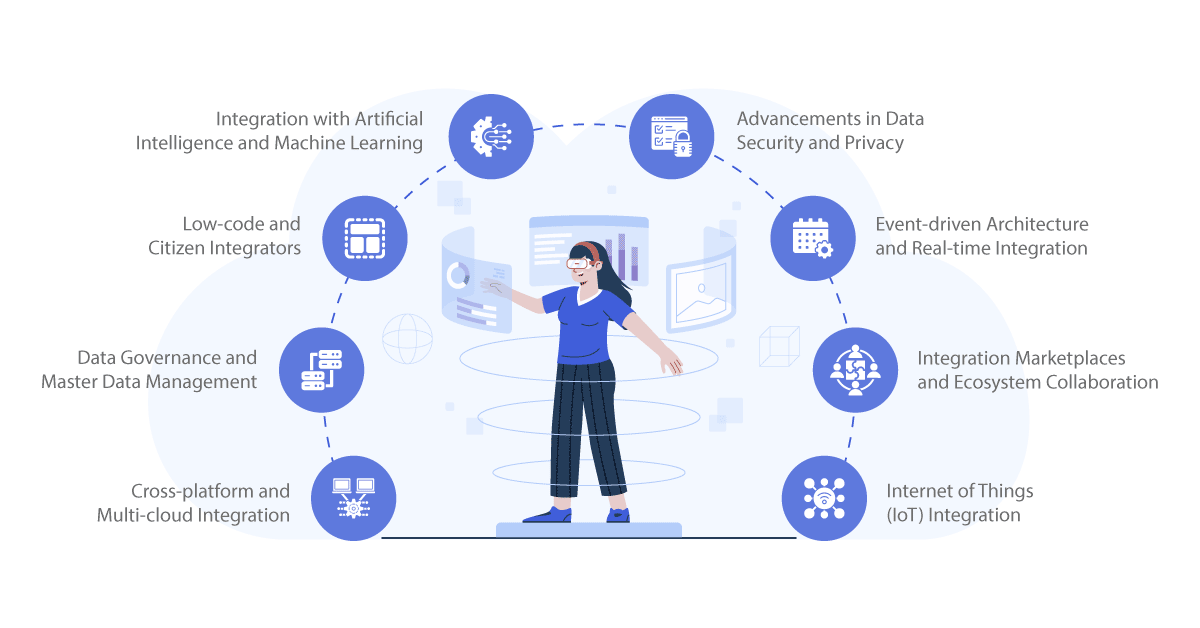
Looking ahead, iPaaS is poised to undergo further advancements and integrations. Here are some key areas to watch for:
Integration with artificial intelligence and machine learning: As organizations increasingly rely on AI and machine learning to gain insights from their data, iPaaS platforms will incorporate these technologies for enhanced integration capabilities. AI algorithms can automate complex data mapping and transformation processes, improving accuracy and efficiency. Machine learning algorithms can analyze integration patterns and recommend optimal integration flows, reducing manual configuration efforts. Additionally, AI-powered anomaly detection can help identify integration issues and proactively address them.
Advancements in data security and privacy: As data protection regulations continue to evolve, iPaaS providers will prioritize robust data security and privacy features. This includes implementing end-to-end encryption for data in transit and at rest, ensuring secure data transfers between systems. iPaaS platforms will also focus on access controls and user authentication mechanisms to prevent unauthorized access to sensitive data. Compliance with data protection regulations such as GDPR and CCPA will be a key consideration for iPaaS providers, offering organizations peace of mind when integrating and exchanging data.
Cross-platform and multi-cloud integration: With the growing adoption of multi-cloud environments and hybrid architectures, iPaaS will evolve to seamlessly integrate applications and services across different platforms and cloud providers. Organizations can choose best-of-breed solutions for different business functions and leverage iPaaS to orchestrate seamless data flow between them. iPaaS platforms will offer a wide range of connectors and adapters to facilitate integration with popular cloud services, enabling organizations to leverage the advantages of various cloud providers while maintaining interoperability and data consistency.
Internet of Things (IoT) integration: As the IoT ecosystem expands, iPaaS will play a crucial role in integrating IoT devices, sensors, and platforms. iPaaS platforms will provide specialized connectors and protocols for seamless integration with IoT devices, allowing organizations to collect, analyze, and act upon real-time IoT data. This integration will enable businesses to optimize processes, monitor equipment performance, detect anomalies, and drive predictive maintenance strategies.
Event-driven architecture and real-time integration: iPaaS platforms will evolve to support event-driven architecture, enabling real-time integration and data streaming. Organizations can leverage event-driven integration to respond quickly to business events and triggers, automate workflows, and enable real-time data synchronization. This capability is particularly valuable for scenarios such as real-time analytics, fraud detection, and IoT data processing.
Low-code and citizen integrators: iPaaS platforms will continue to embrace low-code development approaches, allowing citizen integrators and business users to participate in the integration process. With intuitive graphical interfaces and drag-and-drop functionality, non-technical users can create integration workflows, connect applications, and define data mappings. This democratization of integration empowers business users to drive digital transformation initiatives and reduces the reliance on IT resources for integration tasks.
Data governance and master data management: iPaaS platforms will provide advanced data governance and master data management capabilities. Organizations will be able to define data quality rules, data mapping standards, and data lineage within the iPaaS environment. This ensures consistency, accuracy, and compliance across integrated systems. Master data management features will allow organizations to maintain a centralized and authoritative source of critical data, ensuring data integrity and reducing data inconsistencies across systems.
Integration marketplaces and ecosystem collaboration: iPaaS platforms will continue to expand their integration marketplaces, offering a wide range of connectors, templates, and pre-built integration flows. This ecosystem approach allows organizations to leverage the expertise of third-party developers, system integrators, and technology partners. Integration marketplaces facilitate faster integration deployment, reduce development efforts, and foster collaboration within the iPaaS community.
The future of iPaaS holds immense potential in enabling organizations to achieve seamless integration, enhance data security and privacy, leverage emerging technologies, and drive digital transformation. By staying ahead of the integration curve and embracing the advancements in iPaaS, organizations can unlock new possibilities for innovation, efficiency, and competitiveness in the digital world.
Endnote
iPaaS is poised to play a pivotal role in enabling seamless integration, data management, and digital transformation in the evolving digital world. By connecting disparate systems and applications, iPaaS empowers organizations to unlock the full potential of their applications and data, resulting in improved operational efficiency, enhanced customer experiences, and agility in a rapidly changing business landscape. Embracing iPaaS positions organizations for success in the digital future.
Get Started with Aonflow iPaaS – Free Trial Available!
Build and deploy your integrations at zero cost. No credit card required!