In today’s highly interconnected business environment, organizations rely on a multitude of Software-as-a-Service (SaaS) applications to streamline their operations. Integrating these applications effectively is crucial for optimizing business processes and ensuring operational efficiency. To address the integration challenges, many businesses are turning to Integration Platform as a Service (iPaaS) solutions. iPaaS offers a centralized platform that enables seamless integration between various applications, eliminating the need for extensive IT involvement and reducing costs. However, when considering an iPaaS solution, it is imperative to prioritize security and compliance to protect sensitive data and meet regulatory requirements. In this blog post, we will explore in depth the significance of security and compliance in iPaaS solutions and provide strategies for efficient due diligence.
Get Started with Aonflow iPaaS – Free Trial Available!
Build and deploy your integrations at zero cost. No credit card required!
Understanding the iPaaS Landscape
Before delving into the importance of security and compliance in iPaaS solutions, let’s briefly review what iPaaS entails. Integration Platform as a Service (iPaaS) is a cloud-based platform that enables organizations to connect disparate applications and systems seamlessly. It provides a centralized hub for data flow and integration, facilitating real-time data synchronization and process automation.
The Criticality of Security and Compliance in iPaaS
As businesses increasingly adopt SaaS applications to meet their diverse needs, the demand for integrating these applications becomes paramount. Efficient integration ensures smooth data flow and collaboration across systems, improving overall business performance. However, the integration process must address security and compliance concerns to protect sensitive information and mitigate potential risks.
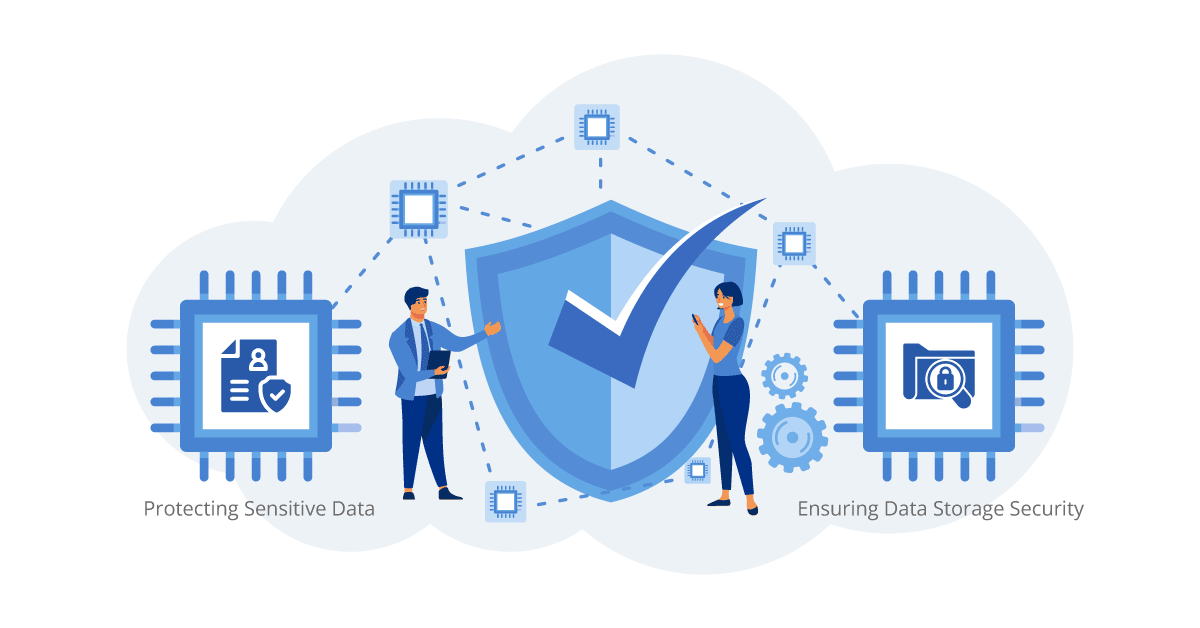
Protecting Sensitive Data
One of the primary considerations when selecting an iPaaS provider is the security of the data being moved or processed. Organizations must identify if the data includes personally identifiable information (PII) or falls under regulatory requirements such as GDPR (General Data Protection Regulation), Privacy Shield, HIPAA (Health Insurance Portability and Accountability Act), PCI (Payment Card Industry Data Security Standard), or FERPA (Family Educational Rights and Privacy Act). iPaaS providers handle sensitive data during transit and processing between applications, making data security a critical factor in the selection process.
To ensure data security, iPaaS solutions should employ robust encryption algorithms to protect data while in transit and at rest. Encryption ensures that even if the data is intercepted, it remains unintelligible to unauthorized parties. Additionally, iPaaS providers should implement access controls, authentication mechanisms, and audit trails to monitor and track data access, ensuring that only authorized personnel can interact with sensitive information.
Ensuring Data Storage Security
In addition to securing data during transit, organizations must assess how iPaaS providers handle data storage. Regulatory requirements often mandate specific security measures for data at rest. While not all standards require encryption at rest, it is generally considered a fundamental aspect of data security. Evaluating an iPaaS provider’s data storage practices and ensuring they align with industry standards is essential for safeguarding sensitive information from unauthorized access or breaches.
Data storage security involves various aspects, such as secure data centers, redundancy measures, disaster recovery plans, and regular backups. iPaaS providers should adhere to industry best practices, including physical security controls, firewalls, intrusion detection systems, and vulnerability assessments to protect stored data from unauthorized access or loss.
Aonflow is the leading integration platform.
You can kick-start by integrating your first-ever workflow in just a matter of minutes.
Efficient Evaluation of iPaaS Security and Compliance
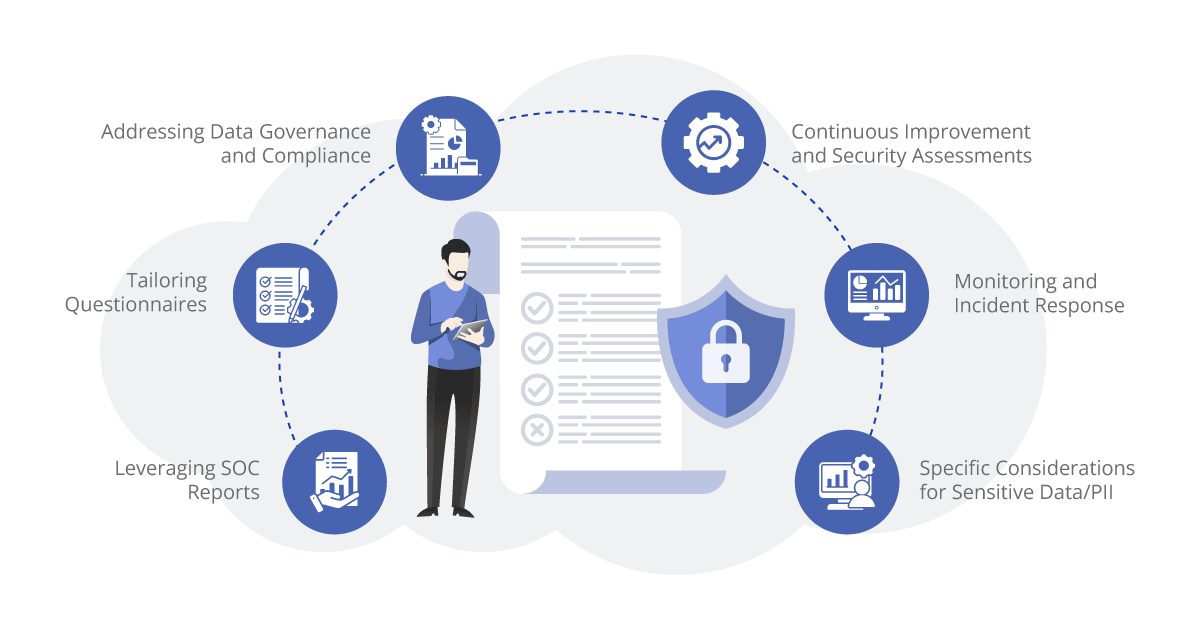
Performing due diligence to evaluate the security and compliance capabilities of iPaaS providers is essential for selecting a reliable solution. However, traditional lengthy questionnaires and audits can significantly prolong the selection process. Here are some strategies to expedite the evaluation while ensuring a comprehensive assessment:
Leveraging SOC Reports
SOC (System and Organization Controls) reports are independent auditor assessments that evaluate a service provider’s controls and processes. Requesting SOC 1 or SOC 2 reports from iPaaS providers can provide valuable insights into their security practices, risk management, and compliance efforts. These reports offer a comprehensive view of the service provider’s capabilities and save time compared to extensive questionnaires. SOC reports should be shared under a non-disclosure agreement (NDA) with auditors, customers, and prospective customers to protect sensitive information.
SOC 1 reports focus on financial services, while SOC 2 reports cover a broader range of services, including SaaS and iPaaS solutions. SOC 3 reports are redacted versions that can be shared publicly. Both SOC 1 and SOC 2 reports can be obtained as Type 1 (test of design) or Type 2 (test of effectiveness). Reviewing these reports can help assess the iPaaS provider’s adherence to industry standards and identify any potential risks or gaps in their security and compliance measures.
Tailoring Questionnaires
While questionnaires are a common tool for evaluating the security and compliance capabilities of service providers, they can be time-consuming for both the evaluator and the provider. To streamline the process, tailor the questionnaire specifically for iPaaS integration, focusing on the unique requirements and considerations of data integration.
To expedite the response process, leverage the information gathered from the SOC reports. Highlight specific sections of the questionnaire that are directly related to the iPaaS provider’s practices and skip irrelevant sections based on the SOC report findings. This targeted approach saves time for both parties and ensures that the evaluation focuses on the most critical aspects of security and compliance.
Include a comments section in the questionnaire to allow providers to provide additional explanations or clarifications for their responses. Not all answers can be simplified to a simple “yes” or “no,” and having a comments section minimizes confusion and the need for multiple email exchanges.
Specific Considerations for Sensitive Data/PII
Depending on the nature of the data being processed or integrated, additional considerations may arise. It is crucial to identify specific compliance requirements and ensure the iPaaS provider can meet those requirements.
For organizations operating within the European Union or handling EU citizens’ data, compliance with GDPR is paramount. Verify that the iPaaS provider is “GDPR Ready” and willing to sign a Data Protection Agreement/Amendment (DPA). If the iPaaS provider is based in the United States, they can also comply with the US Privacy Shield framework, which ensures the protection of personal data transferred between the EU and the US.
If the integrated applications involve payment card information, such as credit card details, it is essential to ensure that the iPaaS provider is PCI-DSS (Payment Card Industry Data Security Standard) compliant. Certification under the PCI-DSS is required for any service provider handling payment card data.
For healthcare organizations or those dealing with electronically protected health information (ePHI), compliance with HIPAA is critical. iPaaS providers must sign a Business Associate Agreement (BAA) that outlines their responsibilities in protecting ePHI and ensures compliance with HIPAA regulations.
Addressing Data Governance and Compliance
In addition to protecting sensitive data, iPaaS solutions must also enable organizations to maintain data governance and comply with industry-specific regulations. Data governance involves establishing policies, processes, and controls to ensure data integrity, quality, and accessibility. When evaluating iPaaS providers, it is essential to assess their data governance practices and understand how they support compliance requirements.
Data governance encompasses several aspects, including data classification, access controls, data retention policies, and data lifecycle management. iPaaS solutions should provide robust mechanisms for managing data access permissions, ensuring that only authorized individuals can view, modify, or delete sensitive information. Role-based access control (RBAC) is a common approach to enforce access controls based on users’ roles and responsibilities within the organization.
Compliance requirements vary across industries. For example, in the financial sector, organizations must adhere to regulations such as the Sarbanes-Oxley Act (SOX), which mandates strict financial reporting and internal control standards. iPaaS providers catering to the financial industry should demonstrate their ability to support SOX compliance by implementing appropriate controls and audit trails.
Similarly, healthcare organizations must comply with the Health Insurance Portability and Accountability Act (HIPAA) to protect patient health information. iPaaS solutions that handle healthcare data should have the necessary safeguards in place, such as encryption, access controls, and audit logs, to meet HIPAA requirements.
Monitoring and Incident Response
While preventive measures are vital, organizations must also consider how iPaaS providers monitor their systems and respond to security incidents. Timely detection of security threats and prompt incident response are crucial for minimizing potential damage and ensuring business continuity.
When evaluating iPaaS providers, inquire about their monitoring capabilities. They should have robust monitoring systems in place to detect anomalies, unauthorized access attempts, and unusual data flows. Intrusion detection systems (IDS) and intrusion prevention systems (IPS) can help identify and prevent potential attacks. Additionally, real-time logging and log analysis tools enable proactive monitoring of system activities and the identification of security events.
Incident response is equally important. Ask iPaaS providers about their incident response processes, including how they handle security breaches, communicate with customers, and remediate any issues. They should have well-defined incident response plans that outline the steps to be taken in the event of a security incident, along with designated incident response teams responsible for executing those plans.
Continuous Improvement and Security Assessments
The landscape of cybersecurity threats is continually evolving, making it crucial for iPaaS providers to adopt a proactive approach to security. Look for providers that demonstrate a commitment to continuous improvement and regularly assess their security posture.
One way iPaaS providers can showcase their commitment to security is through certifications and third-party audits. Common certifications to look for include ISO 27001 (Information Security Management System) and SOC 2 (Service Organization Control 2). These certifications validate that the iPaaS provider has implemented and maintains robust security controls and processes.
Additionally, inquire about the provider’s vulnerability management program. They should conduct regular vulnerability assessments, perform penetration testing, and promptly address any identified vulnerabilities. Regular security audits and assessments demonstrate the provider’s dedication to maintaining a secure environment for customer data.
Conclusion
In the fast-paced business world, speed is crucial to staying competitive. However, when integrating SaaS applications through iPaaS solutions, organizations must prioritize security and compliance to protect sensitive data and ensure regulatory compliance. By leveraging SOC reports, tailoring questionnaires, and considering specific data types, businesses can efficiently evaluate the security and compliance capabilities of iPaaS providers.
Efficient due diligence allows organizations to implement iPaaS solutions without compromising data security or regulatory compliance. By selecting a secure and compliant iPaaS provider, businesses can unlock the full potential of their SaaS applications, streamline processes, and enhance operational efficiency while maintaining the highest standards of data protection.
Get Started with Aonflow iPaaS – Free Trial Available!
Build and deploy your integrations at zero cost. No credit card required!