
The advancement of technology has brought about a significant change in the education sector over the last ten years. The use of computers in schools has gone beyond merely teaching typing skills to children. Now, children are introduced to creating and coding websites as early as elementary school. The introduction of iPads in the classroom has also brought about a new dimension in education, where learning is facilitated through interactive apps and augmented reality.
The use of games in education has gained immense popularity, and children and adults alike are using Minecraft to learn how to code. This has resulted in the creation of a new market for Minecraft modding software. As we transition into a more digitally-driven world for education, it is remarkable to witness how technology ecosystems are coming together to support this movement.
Get Started with Aonflow iPaaS – Free Trial Available!
Build and deploy your integrations at zero cost. No credit card required!
Education and the evolution of technology
The evolution of technology has played a vital role in improving education, particularly in higher education. The use of cloud computing and internet advancements has led to the creation of connected online learning experiences that have revolutionized the way students learn. MOOCs, or Massive Open Online Courses, have become increasingly popular, providing students with access to a wide range of educational courses from anywhere in the world.
Moreover, cloud technology has enabled universities to offer students access to online course materials, allowing them to study at their own pace and convenience. With the help of cloud-based platforms, students can collaborate on group projects, access learning materials, and communicate with their professors and peers from anywhere in the world.
The impact of technology in higher education is not just limited to online learning. iPaaS (Integration Platform as a Service) has also played a critical role in enhancing the educational experience. iPaaS allows universities to integrate various applications, systems, and data sources, allowing them to streamline administrative tasks and make data-driven decisions.
Impact of iPaaS on Education
The learning experience that is connected
The rise of digital devices and apps has given rise to a generation that is comfortable with technology. Students today have access to a wealth of educational resources online, making learning more engaging, convenient, and effective. Colleges and universities are leveraging technology to provide students with a connected learning experience, with custom portals that serve as a one-stop-shop for everything related to their studies.
Through these portals, students can access lecture notes, discussion topics, and feedback from professors, as well as any other academic materials that were traditionally available only in the classroom. With the help of iPaaS technology, which integrates various applications and systems, students and professors can collaborate seamlessly and enjoy a more productive learning experience.
The benefits of a connected learning experience are manifold. Professors can teach more effectively, reaching a wider audience and providing students with real-time feedback and support. Students, on the other hand, can learn at their own pace and have instant access to a wealth of information and resources that they can use to enhance their learning. This not only makes learning more engaging but also accelerates the learning process, helping students to achieve their academic goals more quickly.
The connected learning experience is a game-changer in higher education, enabling students and professors to collaborate more effectively and learn more efficiently. With the continued advancement of iPaaS technology and the increasing prevalence of digital devices and apps, the possibilities for the future of education are truly exciting.
Advantages of iPaaS for higher education institutions
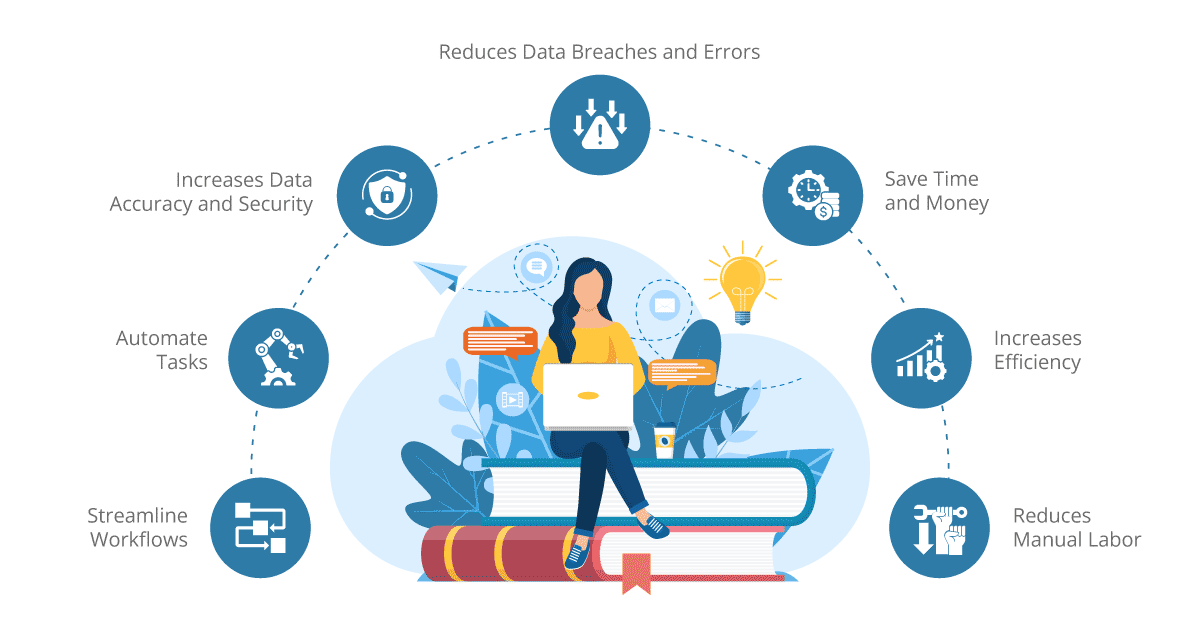
iPaaS can improve administrative processes and workflows. With iPaaS, higher education institutions can streamline workflows and automate tasks, reducing manual labor and increasing efficiency. iPaaS can also increase data accuracy and security. With iPaaS, data can be transferred and accessed securely, reducing the risk of data breaches and errors. Furthermore, iPaaS can lead to cost savings and increased efficiency. By automating tasks and streamlining workflows, iPaaS can help institutions save time and money.
Streamlining Workflows and Automating Tasks
One of the major advantages of iPaaS technology in higher education institutions is the ability to streamline workflows and automate tasks. With a multitude of applications and systems being used in higher education, iPaaS provides a solution to connect these applications and systems, allowing for seamless and automated workflows.
For example, iPaaS can integrate student information systems, learning management systems, and faculty systems, providing a unified experience for students and staff. This enables institutions to automate processes such as enrollment, registration, and course management, leading to a reduction in manual labor and increased efficiency.
Increasing Data Accuracy and Security
Data security is a critical concern for higher education institutions. iPaaS technology provides a secure way to transfer and access data between applications, reducing the risk of data breaches and errors. iPaaS also ensures data accuracy by eliminating the need for manual data entry, reducing the risk of data entry errors. This ensures that institutions can maintain the integrity of their data and protect sensitive information, such as student records, financial information, and research data.
Saving Time and Money
iPaaS technology can lead to cost savings and increased efficiency for higher education institutions. By automating tasks and streamlining workflows, institutions can save time and reduce labor costs. iPaaS can also eliminate the need for custom integrations or manual data entry, reducing the costs associated with maintaining and updating integrations.
Furthermore, iPaaS allows institutions to take advantage of cloud-based solutions, eliminating the need for expensive hardware and infrastructure. This can result in significant cost savings for institutions, while also providing access to powerful cloud-based tools and applications.
The role of iPaaS in scaling IT infrastructure for higher education
Educational institutions have a wide range of applications and systems that they need to manage, from student and health portals to email servers and storage for various campus transactions. The challenge lies in getting these disparate systems to talk to each other and sync data seamlessly. This is where iPaaS technology comes in.
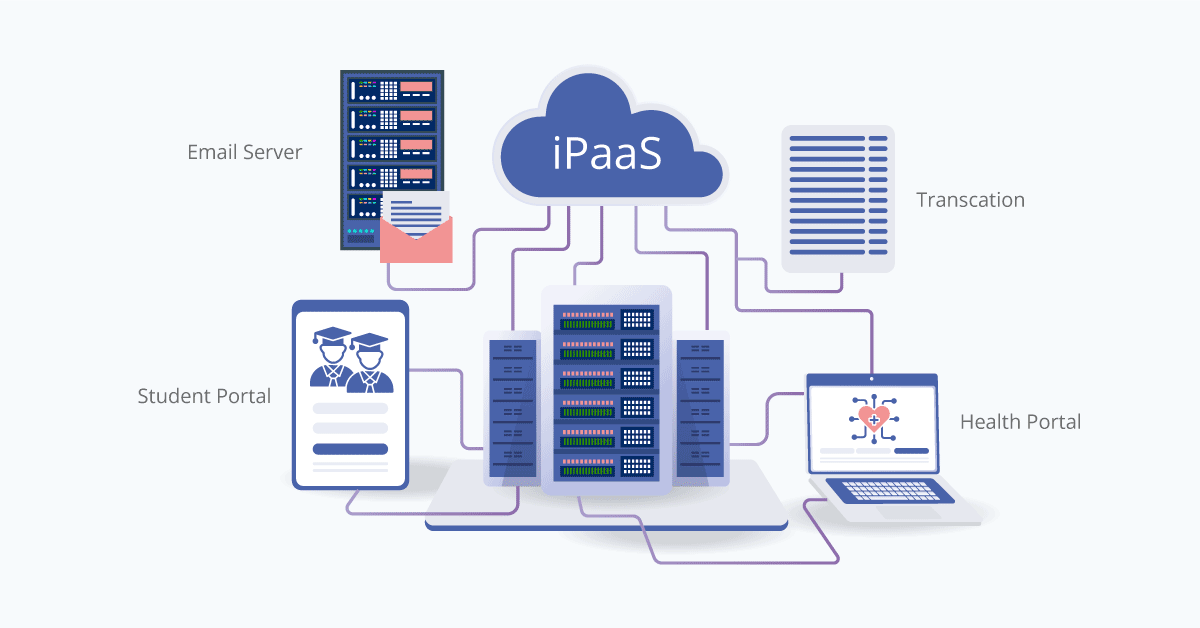
iPaaS enables institutions to integrate their various applications and data sources into a unified platform, creating a connected ecosystem that streamlines administrative tasks and improves the student experience. With iPaaS, institutions can automate workflows, eliminate data silos, and improve data accuracy and visibility.
By leveraging iPaaS technology, institutions can also scale their IT infrastructure to meet the growing needs of their student and faculty populations. They can quickly and easily add new applications and systems as needed, without worrying about compatibility or integration issues.
The benefits of iPaaS extend beyond the technical realm. By creating a connected ecosystem, institutions can provide a more personalized and engaging experience for their students. For example, they can use data analytics to gain insights into student behavior and preferences and use this information to create tailored learning experiences.
iPaaS is a critical component of the digital transformation of higher education. By connecting applications and data sources, institutions can create a seamless and personalized experience for their students while streamlining administrative tasks and improving data accuracy and visibility.
Aonflow is the leading integration platform.
You can kick-start by integrating your first-ever workflow in just a matter of minutes.
The Power of iPaaS Technology in Higher Education
As technology continues to advance at a rapid pace, it has become increasingly apparent that it has a significant impact on the education sector. Over the past decade, we have witnessed a massive shift in the way educational institutions approach teaching and learning. The introduction of computers in elementary schools is no longer limited to teaching children how to type. Nowadays, elementary school curriculums teach kids how to create and code websites. Children are even using iPads with apps and augmented reality to learn.
This shift towards a digital learning environment is fascinating, and it is only natural that iPaaS technology would play a significant role in this transition. iPaaS, or Integration Platform as a Service, is a cloud-based service that allows organizations to integrate various applications and data sources, enabling them to communicate with each other seamlessly.
One of the most significant advantages of iPaaS in higher education is the ability to create a connected learning experience. With instant access to lecture notes, videos, and supplemental materials online, schools can provide students with more engaging and convenient methods of learning. This type of instant access also accelerates the progress of learning.
iPaaS helps educational institutions scale their IT infrastructure and connect various applications. Colleges and universities typically have to run multiple applications such as student portals, health portals, coursework portals, email servers, and data storage for everything that needs recording on campus. With iPaaS, these applications can communicate with each other seamlessly, eliminating the frustration and complexity of managing multiple disconnected applications.
Challenges and Considerations for iPaaS Implementation
One potential challenge in implementing iPaaS technology in higher education is data privacy and security. Institutions must ensure that sensitive data is protected and that data privacy regulations are followed. Choosing the right iPaaS provider is crucial. Institutions should choose a provider that offers high levels of security and data protection.
Another challenge in implementing iPaaS technology is integration with legacy systems. Institutions must ensure that their existing systems can be integrated with iPaaS technology seamlessly. This may require additional resources and expertise.
iPaaS For Higher Education: Examples
The use of Integration Platform as a Service (iPaaS) is becoming more prevalent in higher education institutions. Deakin University in Australia is an example of how iPaaS has transformed its learning experience. The university had various disconnected applications that made learning a challenge for its students. However, by partnering with MuleSoft’s Anypoint Platform, the university was able to integrate 200 of its applications, providing students and staff with a centralized portal for personalized resources and capabilities.
The Chief Digital Officer of Deakin University, Confalonieri, stated that their goal is to deliver powerful, simple, compelling, and delightful digital experiences for all stakeholders, especially students. The project has gained recognition in the market, with peers approaching Confalonieri to understand what they are doing.
As education materials and learning methods continue to evolve, iPaaS is helping educational institutions stay competitive by improving the learning experience for students. To learn more about how Deakin University used iPaaS, check out the Deakin case study. To find out how Aonflow’s iPaaS Platform can enable connected learning in higher education, browse through our website or contact us.
Get Started with Aonflow iPaaS – Free Trial Available!
Build and deploy your integrations at zero cost. No credit card required!