
Amidst the dynamic evolution of technology and the growing expectations of citizens, government agencies find themselves at a crossroads. The need to modernize operations and meet the ever-changing demands of the populace has become a pressing priority. Within this landscape of administrative complexities, Integration Platform as a Service (iPaaS) emerges as a pivotal catalyst for transformation.
The global market for iPaaS is poised for remarkable growth, projected to surge to an impressive US$ 61.67 billion by 2030. This exponential expansion anticipates a staggering Compound Annual Growth Rate (CAGR) of 32.47% from 2023 to 2030. Such substantial growth forecasts underscore the region’s burgeoning adoption of iPaaS solutions, reflecting the increasing recognition of its transformative potential across diverse industries and sectors, including government departments. This statistic underscores the consensus among experts regarding the pivotal role iPaaS assumes in driving innovation, especially within governmental frameworks.
iPaaS offers a robust framework that extends beyond conventional upgrades. It stands as a cornerstone in the reimagining of how governments deliver services and engage with their constituents. The challenges faced by these agencies – grappling with legacy systems, navigating data silos, and striving for seamless service delivery – find a potent solution in the form of iPaaS.
It’s more than a technological upgrade; it’s a fundamental shift in approach. iPaaS doesn’t just connect systems; it orchestrates a fundamental reconfiguration of operations. Its implementation signifies a move towards cohesive workflows, interconnected databases, and a revolutionized accessibility to critical information.
In this discourse, we dive into the transformative potential of iPaaS within the governmental sphere. Exploring its manifold advantages, understanding its adaptability across diverse departments, and substantiating its impact through real-world examples, we illuminate the profound implications of iPaaS adoption. Join us on this exploration as we uncover the pivotal role iPaaS plays in reshaping government services and redefining citizen engagement.
Get Started with Aonflow iPaaS – Free Trial Available!
Build and deploy your integrations at zero cost. No credit card required!
iPaaS in the Context of Government Agencies
In the realm of Government Agencies, iPaaS transcends its technical definition to become the linchpin of operational cohesion and citizen-centric governance. At its core, iPaaS serves as a connective tissue, knitting together the diverse fabric of systems, applications, and data repositories that often exist as isolated islands within bureaucratic structures.
The essence of iPaaS lies in its ability to transcend the barriers imposed by disparate systems. It’s not merely a bridge; it’s the architect of a new landscape, seamlessly integrating cloud-based and on-premises applications to create a unified ecosystem. Within the labyrinthine corridors of governmental departments, iPaaS orchestrates a symphony of connectivity, harmonizing processes that were once disjointed.
Its significance doesn’t merely rest in the technical prowess to connect; rather, iPaaS assumes the role of an operational maestro. It navigates the intricate pathways of information flow, ensuring that vital data traverses effortlessly between agencies and departments. This streamlined communication transcends mere efficiency; it becomes the cornerstone of informed decision-making, enabling a holistic understanding of governmental operations.
The complexity of government operations often necessitates intricate workflows. iPaaS steps in as the conductor, orchestrating these workflows with finesse. Its adaptability and flexibility empower agencies to mold workflows to meet specific needs, navigating the nuances of administrative processes with precision and agility.
In the context of Government Agencies, iPaaS isn’t just a technological platform; it’s the catalyst for systemic transformation. It doesn’t merely bridge gaps; it paves the way for a reimagined ecosystem where information flows seamlessly, operations synchronize effortlessly, and the focus pivots toward serving citizens with unparalleled efficiency and effectiveness.
Challenges in Government Service Delivery
Navigating the intricate terrain of government service delivery unveils a landscape fraught with challenges that have persisted over time. These challenges, entrenched within the very fabric of bureaucratic systems, serve as formidable barriers to achieving seamless service delivery and fostering citizen satisfaction.
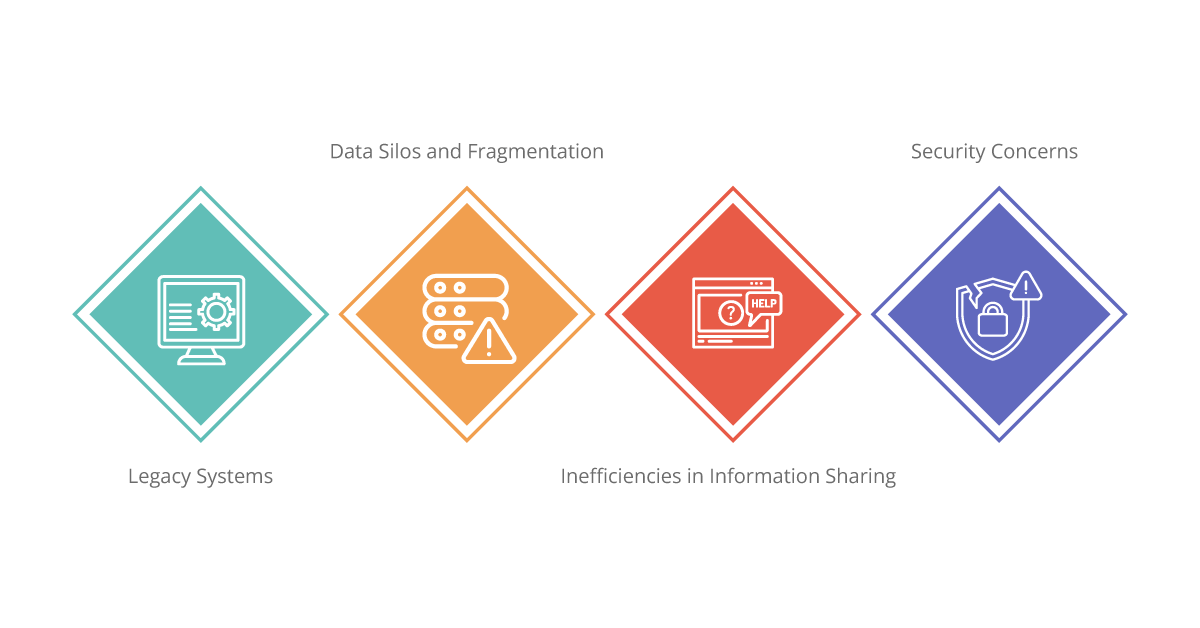
Legacy Systems:
Government agencies often grapple with outdated legacy systems that have stood the test of time but now hinder progress. These systems, built on antiquated technologies and frameworks, struggle to keep pace with the rapidly evolving digital landscape. Their inflexibility and limitations impede the integration of modern solutions and hinder the agility required to adapt to changing citizen needs.
Data Silos and Fragmentation:
A prevalent challenge lies in the existence of data silos – isolated repositories of information scattered across departments and agencies. These silos inhibit data accessibility and coherence, resulting in fragmented insights. The lack of a unified data ecosystem prevents agencies from harnessing the full potential of their information, leading to inefficiencies in decision-making and service delivery.
Security Concerns:
The paramount importance of data security within government agencies adds another layer of complexity. Safeguarding sensitive citizen information against evolving cyber threats is a continuous battle. Legacy systems often lack robust security measures, making them susceptible to breaches. Balancing the need for accessibility with stringent security protocols becomes a delicate tightrope walk for these agencies.
Inefficiencies in Information Sharing:
The sheer magnitude of government operations often translates into a maze of bureaucratic procedures and processes. In this labyrinth, the seamless sharing of information between departments becomes a challenge. Inefficiencies in information sharing hinder collaboration, impede the timely exchange of critical data, and ultimately affect the quality and speed of service delivery.
These challenges, deeply entrenched within the bureaucratic framework, stand as formidable barriers to progress. However, amidst these obstacles lies an opportunity for transformation – an opportunity heralded by the integration of iPaaS within government agencies. iPaaS doesn’t just address these challenges; it presents a pathway to surmount them, laying the groundwork for a paradigm shift in governmental service delivery and citizen engagement.
Empowering Government Operations with iPaaS Advantages
In the realm of governmental modernization, iPaaS emerges as a cornerstone, offering a trifecta of transformative advantages poised to revolutionize government operations.
1. Augmented Agility:
iPaaS functions as a dynamic catalyst, enabling government agencies to navigate the swiftly changing tides of technology. Its prowess in simplifying data and application integration fosters a seamless flow of information, bolstering the agility needed for prompt decision-making. By harmonizing disparate data sources and applications, iPaaS empowers agencies to adapt swiftly to evolving technology trends, ensuring their IT modernization endeavors stay aligned with the pace of technological innovation.
2. Mission-Centric Synergy:
A unified platform encapsulates the essence of iPaaS, serving as a nexus for collaborative efforts within government teams. Here, teams converge to craft applications and user experiences, swiftly releasing them as APIs in a singular, streamlined process. The integration of generative AI automates workflows, simplifying complex tasks, while central management functionality acts as a vigilant guardian, deterring unauthorized “shadow integrations.” This cohesive environment aligns missions, propelling agencies toward their goals with unified vigor.
3. Mitigated Risks through Unified Governance:
iPaaS offers a unique dichotomy – centralized control coupled with distributed execution, facilitating integrations across diverse environments. This duality culminates in a panoramic view for agencies, encompassing all transactions, integrations, APIs, and data pipelines. This unified vista ensures comprehensive observability and compliance, mitigating potential chaos and risks. Agencies benefit from a unified experience, reducing vulnerabilities and enhancing operational resilience in the face of complexities.
iPaaS for government agencies doesn’t just offer benefits; it spearheads a paradigm shift. It amplifies agility, aligns missions, and fortifies governance, culminating in an era of technological advancement and streamlined operations for governmental bodies.
Aonflow is the leading integration platform.
You can kick-start by integrating your first-ever workflow in just a matter of minutes.
Real-world Impact: Use Cases across Government Departments
Healthcare Revolutionized:
Within the healthcare sector, iPaaS emerges as a catalyst for seamless data exchange. Its implementation facilitates the frictionless sharing of patient data among hospitals, clinics, and insurance providers. This connectivity not only enhances the accessibility of healthcare information but also revolutionizes the delivery of services. Patients receive more informed and personalized care, while healthcare providers optimize their operations for enhanced efficiency and accuracy.
Public Safety Reinvented:
Integration becomes the cornerstone of real-time information sharing among law enforcement agencies. iPaaS empowers agencies to transcend communication barriers, enabling swift and efficient exchange of crucial data. This seamless flow of information translates into quicker responses to emergencies, heightened situational awareness, and ultimately, a substantial enhancement in public safety measures.
Education Enhanced:
In the educational domain, iPaaS streamlines the labyrinth of student data management across schools and educational institutions. By ensuring seamless integration and exchange of information, administrative processes become smoother and more efficient. This not only optimizes resource allocation but also fosters personalized learning experiences for students, laying the groundwork for a more effective and student-centric educational system.
Citizen Engagement and Satisfaction:
At the heart of iPaaS implementation within government agencies lies its profound impact on citizen engagement. By orchestrating streamlined services, fostering personalized interactions, and ensuring the accessibility of information, iPaaS elevates citizen satisfaction levels significantly. Citizens experience a paradigm shift in their interactions with governmental bodies – one characterized by transparency, efficiency, and personalized attention. This heightened satisfaction fosters trust, fortifying the bond between citizens and their governing entities.
iPaaS transcends the realms of technology; it becomes the fulcrum upon which government agencies pivot towards innovation, efficiency, and, most importantly, citizen-centric service delivery.
Who Benefits from iPaaS Implementation with Government Frameworks?
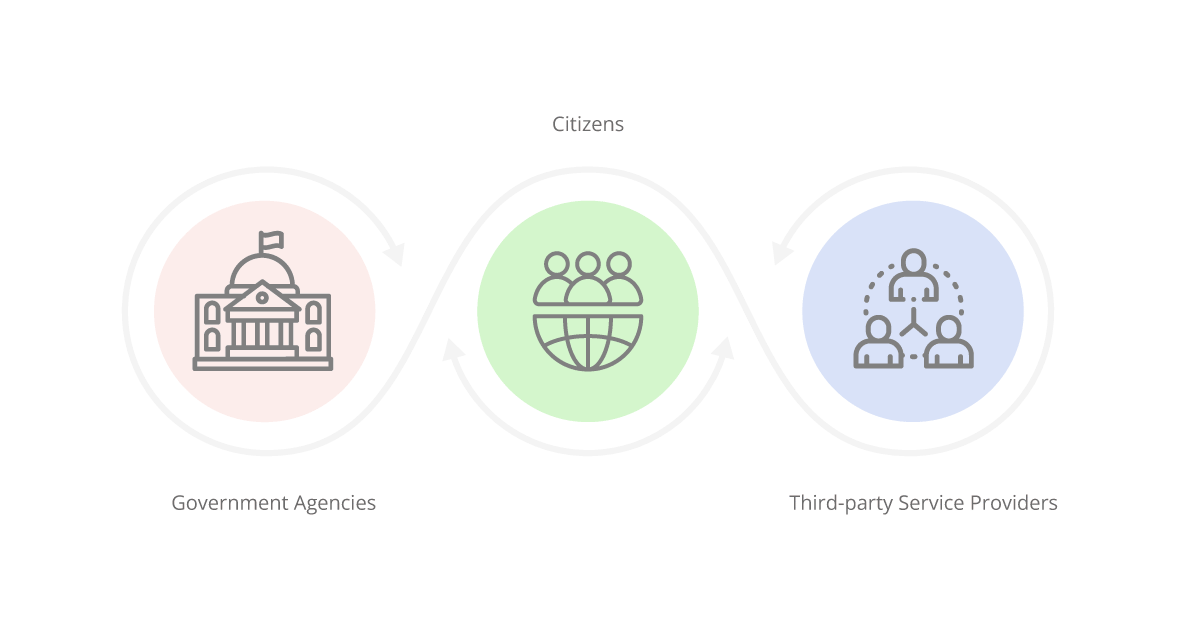
1. Government Agencies:
Efficiency Gains: iPaaS injects a dose of efficiency into the veins of government agencies. By streamlining processes, automating workflows, and facilitating seamless data integration, iPaaS empowers agencies to optimize their operations. Tasks that were once labor-intensive and time-consuming become streamlined, freeing up resources and enabling personnel to focus on higher-value activities. The result? Enhanced productivity and efficiency across the board.
Cost Savings: The efficiency unlocked by iPaaS translates directly into cost savings. Reduction in manual processes, elimination of data silos, and optimized resource allocation lead to tangible financial benefits. Government agencies witness a reduction in operational costs, allowing them to reallocate budgets to strategic initiatives while delivering services more economically.
Improved Decision-making: Access to integrated, real-time data is a game-changer for decision-makers within government agencies. iPaaS provides a comprehensive view of critical information, empowering decision-makers with actionable insights. Informed decisions based on timely and accurate data become the norm, driving better policy formulation and strategic planning.
2. Citizens:
Access to Better Services: Citizens are the ultimate beneficiaries of iPaaS adoption within government agencies. iPaaS ensures that citizens have access to more efficient, streamlined services. Whether it’s applying for permits, accessing healthcare information, or engaging with various government services, iPaaS enables quicker, more user-friendly interactions.
Personalized Interactions: iPaaS facilitates personalized services by providing a holistic view of citizen data. Government agencies can tailor services to individual needs, offering personalized recommendations and assistance. This level of customization enhances the citizen experience, fostering satisfaction and trust in government services.
Enhanced Transparency: iPaaS contributes to greater transparency in government operations. By breaking down data silos and ensuring seamless information sharing, citizens gain improved visibility into government processes and decisions. This transparency fosters trust and accountability, strengthening the relationship between citizens and their government.
3. Third-party Service Providers:
Seamless Integration Opportunities: iPaaS doesn’t just benefit government agencies directly; it opens doors for third-party service providers as well. These providers, specializing in niche services, can seamlessly integrate their solutions with government systems through iPaaS. This integration potential enables them to offer specialized, value-added services to government agencies, fostering collaboration and innovation in service delivery.
iPaaS in government isn’t a one-sided boon; it’s a win-win scenario benefiting government agencies, citizens, and even external service providers. The ripple effect of efficiency, transparency, and personalized services permeates through the governmental ecosystem, enhancing the overall experience and effectiveness of governance.
Revolutionizing Service Delivery and Citizen Engagement
The integration of iPaaS within government agencies transcends the realm of mere technological advancement; it’s a pivotal moment in redefining the landscape of governance. Aonflow iPaaS emerges as the beacon guiding government agencies toward a future marked by efficiency, transparency, and citizen empowerment.
The transformative potential of iPaaS within government agencies is undeniable. It’s not just about connecting systems; it’s about architecting a new era of governance. Aonflow iPaaS serves as the catalyst, orchestrating seamless data integration, streamlining workflows, and fostering collaboration among disparate systems within government entities.
Embracing Aonflow iPaaS solutions for integration and automation needs is more than an investment; it’s a commitment to revolutionize governance. The potential for innovation and citizen-centric governance becomes boundless as agencies harness the power of iPaaS. Aonflow iPaaS not only addresses current challenges but also paves the way for future-proof, agile governance capable of adapting to the evolving needs of citizens.
In this era of digital transformation, the choice to leverage Aonflow iPaaS isn’t just a step forward; it’s a leap toward a connected, efficient, and citizen-centric government ecosystem. It’s time for government agencies to embrace Aonflow iPaaS and embark on a journey towards reimagined service delivery and empowered citizen engagement.
Get Started with Aonflow iPaaS – Free Trial Available!
Build and deploy your integrations at zero cost. No credit card required!