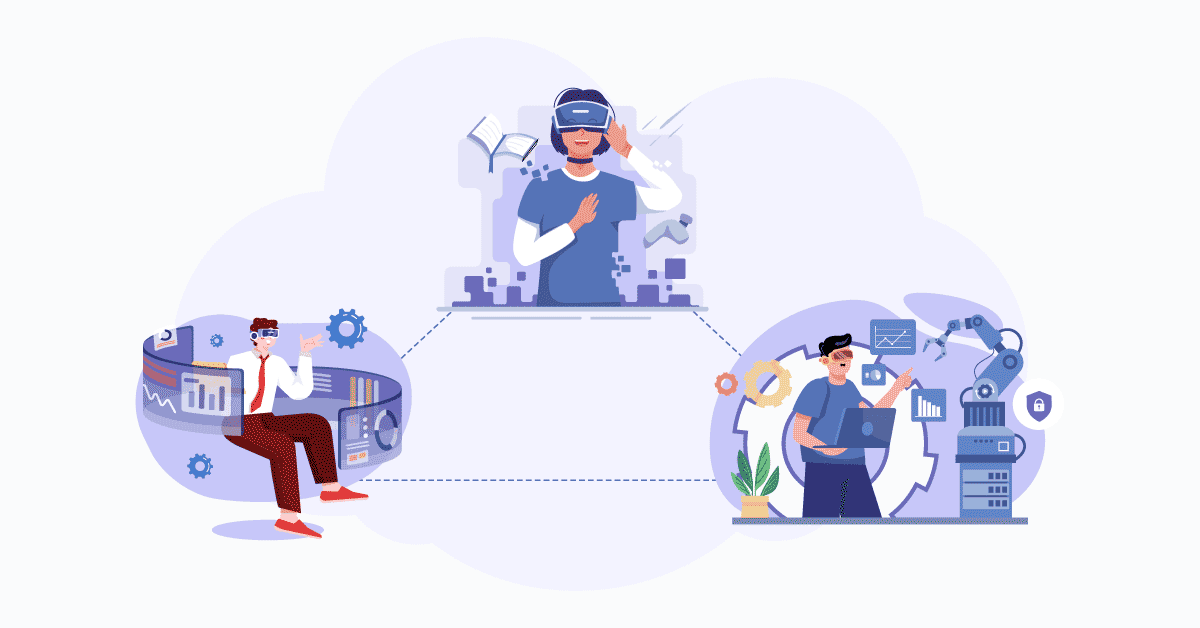
Over the past few years, the world has witnessed an explosion of digital transformation. As we enter the new era of the metaverse, the role of APIs and hyper-automation is becoming increasingly important. In this blog post, we will discuss how businesses can leverage the power of API integration and hyper-automation to excel in the metaverse.
Get Started with Aonflow iPaaS – Free Trial Available!
Build and deploy your integrations at zero cost. No credit card required!
Metaverse
First, let’s define what we mean by the term “metaverse.” The metaverse is a term used to describe a virtual world that is a combination of physical and virtual reality. It is an immersive and interactive environment where users can interact with each other and with digital objects. The metaverse is not a single platform, but rather a collection of interconnected platforms that can be accessed using a variety of devices.
API
Now, let’s talk about API integration. APIs (Application Programming Interfaces) are a set of protocols, tools, and standards for building software applications. APIs allow different software systems to communicate with each other and exchange data. API integration involves integrating two or more software systems using APIs.
API integration is important in the metaverse because it allows different platforms to communicate with each other seamlessly. For example, imagine a virtual reality game that allows users to buy and sell virtual goods using cryptocurrency. The game could use APIs to communicate with a cryptocurrency exchange platform to facilitate the buying and selling of virtual goods.
Hyper-automation
Hyperautomation is another important technology in the metaverse. Hyper-automation is the combination of robotic process automation (RPA) and artificial intelligence (AI) to automate complex business processes. Hyper-automation can help businesses to streamline their operations, reduce costs, and improve efficiency.
In the metaverse, hyper-automation can be used to automate a variety of tasks. For example, imagine a virtual reality shopping mall that uses hyper-automation to automate the process of restocking products. When a product runs out of stock, a robotic arm could automatically retrieve a new product from the storage room and place it on the shelf.
Now that we have a basic understanding of API integration and hyper-automation, let’s discuss how businesses can leverage these technologies to excel in the metaverse.
Seamless integration between platforms
One of the biggest challenges in the metaverse is the lack of interoperability between different platforms. For example, a user may have a virtual reality headset from one manufacturer and a virtual reality game from another manufacturer. These two systems may not be compatible with each other, making it difficult for the user to access the game using their headset.

The API integration can help to solve this problem by allowing different platforms to communicate with each other seamlessly. For example, a virtual reality game could use APIs to communicate with different virtual reality headset manufacturers to ensure that the game is compatible with their headsets.
Improved customer experience
The metaverse offers businesses a unique opportunity to provide customers with a highly immersive and interactive experience. However, to achieve this, businesses need to provide customers with a seamless experience across different platforms.
API integration and hyper-automation can help businesses to achieve this goal by automating many of the processes involved in delivering a seamless customer experience. For example, imagine a virtual reality shopping mall that uses hyper-automation to automate the process of restocking products. This could improve the customer experience by ensuring that products are always in stock and reducing the amount of time customers have to wait for products to be restocked.
Improved efficiency
Hyper-automation can help businesses to streamline their operations and reduce costs. In the metaverse, this can be particularly important because businesses may need to operate across multiple platforms.
For example, imagine a virtual reality game that allows users to buy and sell virtual goods using cryptocurrency. The game could use hyper-automation to automate the process of verifying transactions and updating user account balances. This could improve efficiency by reducing the amount of time and resources needed to process transactions manually.
New revenue streams
The metaverse offers businesses new opportunities to generate revenue. For example, businesses can sell virtual goods and services, offer virtual experiences, and provide advertising space in virtual environments.
API integration and hyper-automation can help businesses to capitalize on these new revenue streams by enabling them to automate many of the processes involved in delivering virtual goods and services. For example, a virtual reality game that allows users to buy and sell virtual goods could use APIs to communicate with a cryptocurrency exchange platform to facilitate transactions.
Competitive advantage
Businesses that are able to leverage the power of API integration and hyper-automation in the metaverse will have a significant competitive advantage. These technologies can help businesses to deliver a seamless customer experience, improve efficiency, and generate new revenue streams.
For example, imagine two virtual reality shopping malls. One shopping mall uses hyper-automation to automate the process of restocking products, while the other shopping mall relies on manual processes. The shopping mall that uses hyper-automation will be able to offer customers a better experience and generate more revenue.
Building interoperable platforms with APIs
As mentioned earlier, interoperability is a major challenge in the metaverse. Businesses can solve this problem by building interoperable platforms with APIs. By using APIs, businesses can create open standards for communication between different platforms, allowing them to seamlessly integrate with each other.
Aonflow is the leading integration platform.
You can kick-start by integrating your first-ever workflow in just a matter of minutes.
For example, Open Metaverse Interoperability Protocol (OMI) is an open-source project that aims to create a set of APIs and standards for building interoperable virtual environments. OMI allows developers to build applications that can run on different virtual environments, creating a more seamless experience for users.
Streamlining operations with hyper-automation
Hyper-automation can help businesses to streamline their operations in the metaverse by automating many of the processes involved in delivering virtual goods and services. By automating these processes, businesses can reduce the time and resources needed to deliver these products and services, improving efficiency and reducing costs.
For example, imagine a virtual reality game that allows users to buy and sell virtual goods using cryptocurrency. The game could use hyper-automation to automate the process of verifying transactions and updating user account balances. This would reduce the time and resources needed to process transactions manually.
Creating immersive experiences with hyper-automation
Hyper-automation can also help businesses to create more immersive experiences in the metaverse. For example, businesses can use hyper-automation to create intelligent virtual assistants that can interact with users in a more natural way.
For example, imagine a virtual reality game that uses hyper-automation to create an intelligent virtual assistant that can help users navigate the game world. The virtual assistant could use natural language processing (NLP) to understand user requests and respond in a more human-like way, creating a more immersive experience for users.
Improving security with API integration
The API integration can also help businesses to improve security in the metaverse. By using APIs to integrate different platforms, businesses can create a more secure environment for users.
For example, imagine a virtual reality game that allows users to buy and sell virtual goods using cryptocurrency. The game could use APIs to communicate with a cryptocurrency exchange platform to facilitate transactions. By using APIs, the game could ensure that transactions are verified and secure, reducing the risk of fraud.
Use Cases
Virtual real estate management
In the metaverse, virtual real estate is a valuable asset. Businesses can use API integration and hyper-automation to streamline the management of the virtual real estate, making it easier to buy, sell, and rent virtual properties.
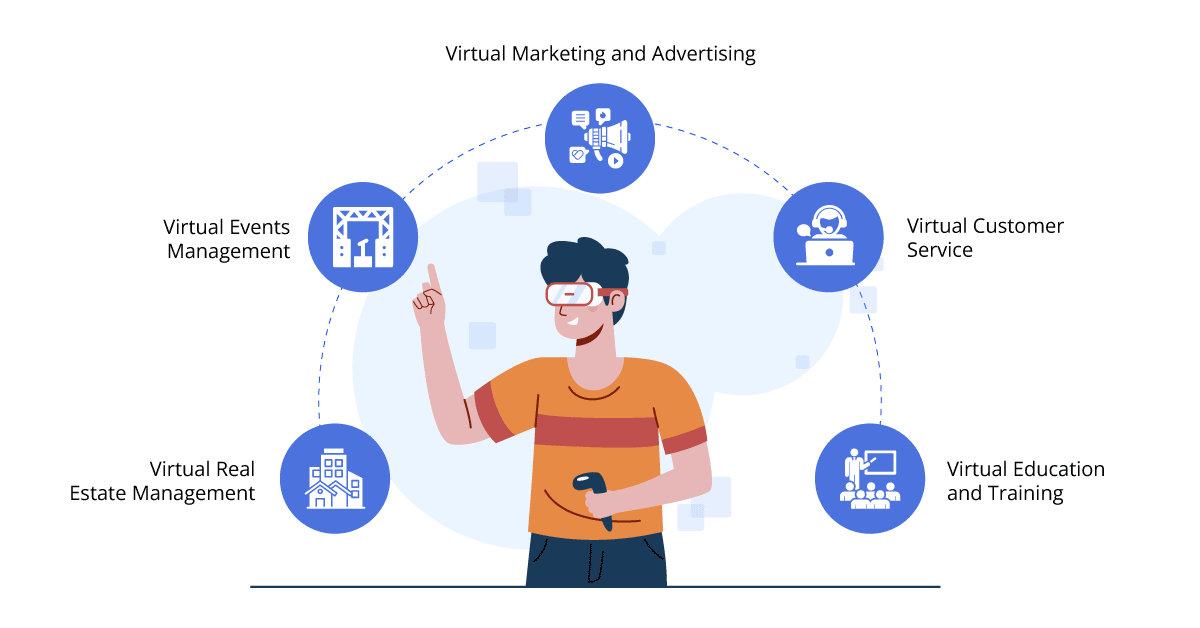
For example, a virtual real estate platform could use APIs to communicate with other virtual environments, allowing users to easily buy and sell virtual properties across different platforms. Hyper-automation could also be used to automate the process of managing virtual properties, such as restocking virtual stores or updating virtual infrastructure.
Virtual events management
Virtual events are becoming increasingly popular in the metaverse. Businesses can use API integration and hyper-automation to streamline the management of virtual events, making it easier to create and manage large-scale virtual events.
For example, a virtual event management platform could use APIs to communicate with other virtual environments, allowing users to easily access different virtual event spaces. Hyper-automation could also be used to automate the process of managing virtual events, such as creating virtual booths or managing virtual attendees.
Virtual marketing and advertising
Virtual marketing and advertising is another area where businesses can leverage the power of API integration and hyper-automation. By using APIs, businesses can create targeted advertising campaigns that reach specific audiences in the metaverse.
For example, a virtual advertising platform could use APIs to communicate with different virtual environments, allowing businesses to place targeted ads in specific virtual locations. Hyper-automation could also be used to automate the process of creating and managing virtual advertising campaigns, such as updating ad content or tracking ad performance.
Virtual customer service
In the metaverse, businesses can provide customer service through virtual assistants or avatars. By using APIs and hyper-automation, businesses can create intelligent virtual assistants that can provide personalized customer service to users.
For example, a virtual customer service platform could use APIs to communicate with different virtual environments, allowing users to access customer service from within the virtual environment. Hyper-automation could also be used to create intelligent virtual assistants that can understand user requests and respond in a natural way.
Virtual education and training
Virtual education and training is another area where businesses can leverage the power of API integration and hyper-automation. By using APIs, businesses can create virtual education and training platforms that integrate with different virtual environments.
For example, a virtual education platform could use APIs to communicate with different virtual environments, allowing students to access virtual classrooms or training modules from within the virtual environment. Hyper-automation could also be used to automate the process of creating and managing virtual education and training programs, such as grading assignments or tracking student progress.
Conclusion
The metaverse represents a new frontier for businesses to explore. By leveraging the power of API integration and hyper-automation, businesses can create interoperable platforms, streamline operations, create immersive experiences, improve security, and create new revenue streams. As the metaverse continues to evolve, businesses that are able to adapt and innovate will be the ones that succeed.
Get Started with Aonflow iPaaS – Free Trial Available!
Build and deploy your integrations at zero cost. No credit card required!