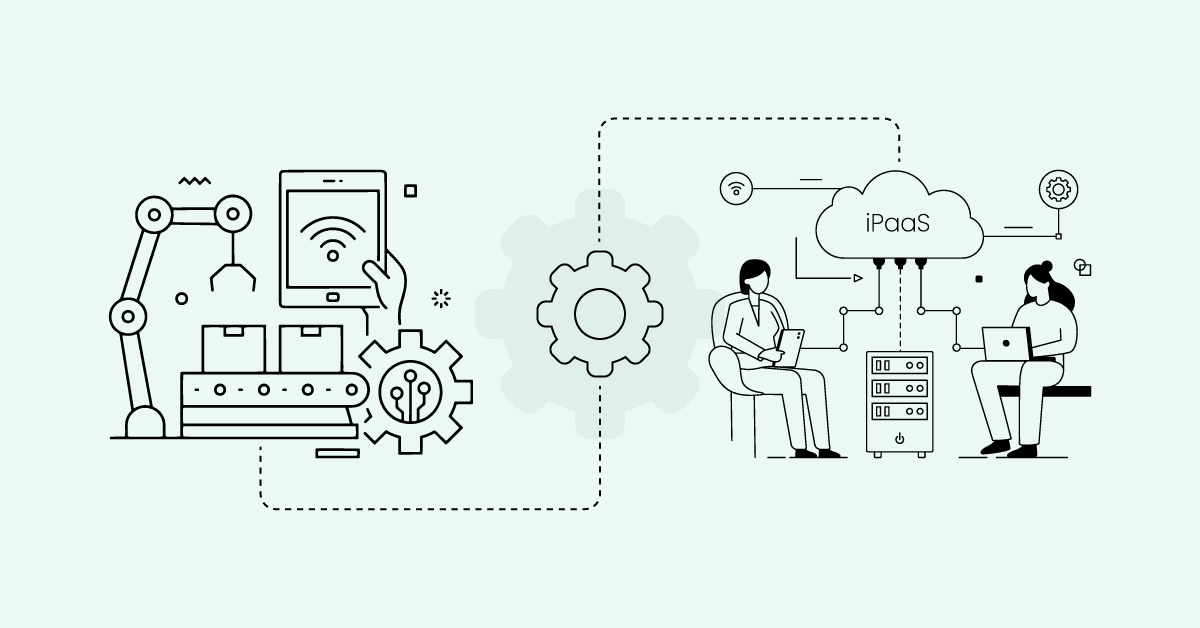
Hyperautomation is transforming work in exciting ways. It’s about automating as many processes as possible, at scale. With the evolution of technology, businesses are inquiring for speedier and wiser solutions. They look to eliminate manual tasks, and free users to do higher-value work. This is where hyper-automation comes in and is gaining traction.
But one question never fails to stand out: how do we integrate a plethora of software tools, data, and workflows seamlessly? This is where iPaaS (Integration Platform as a Service) comes into the picture. It holds together — and integrates — all the moving parts of an enterprise. And helps keep everything organized and efficient. This blog explores data on iPaaS workflow automation, the importance of its hyper-automation, and how it connects to a strong automation governance framework. Read on for the future of hyper-automation and how to set up your business for success.
Get Started with Aonflow iPaaS – Free Trial Available!
Build and deploy your integrations at zero cost. No credit card required!
Understanding Hyperautomation
While basic automation is intent-based, hyper-automation is production-based — focused on the scale as the scale of business grows. Its goal is to automate numerous responsibilities and procedures wherever possible, through various departments. This requires the implementation of sophisticated technology including AI, machine learning, robotic process automation, and analytics. Together, these tools identify inefficiencies and eliminate manual tasks whenever possible.
Hyperautomation does not aim to replace people. To enable them to achieve more with less effort. Imagine a workplace where employees no longer spend hours inputting the same data over and over again. Instead, they may exercise critical thinking and strategic planning. This is hyperautomation’s promise.
However, hyper-automation is not straightforward. Many processes rely on multiple software systems, and our data is scattered across silos. Putting all of that together is never easy. This is why you need an integration approach. That is where iPaaS comes into play. It connects data, workflows, and apps together in a unified environment.
Benefits of iPaaS in Hyperautomation
Hyperautomation means automating end-to-end workflows. This typically involves linking multiple apps and data sources. If this connection is not done properly, bottlenecks can happen. That’s exactly why the iPaaS is critical.
With an iPaaS, you can connect different software tools together. This is critical when you want one process to flow through different tools. For instance, a lead in your CRM can start an automated email sequence. Then it can send data to a marketing analytics platform. All these tasks take place without human intervention. They use iPaaS to synchronize data.
With integration Platform as a Service (iPaaS), you also eliminate the headaches of maintenance. Rather than writing direct integrations between every app and every other app, you have one central place where you manage the connections. This results in improved performance and reduced errors. It also simplifies updates and expansions in the future.
How to Do it Right: iPaaS Workflow Automation

Workflow automation will usually consist of many tasks flowing through stages. Regardless of the system involved, iPaaS workflow automation keeps each stage running smoothly. This is great for processes such as:
- Client onboarding
- Invoice approvals
- Order fulfillment
- Employee onboarding
Hyperautomation has its sights set on expanding automation across entire organizations in the future. That’s where the iPaaS workflow automation framework can come into play. It pulls data from disparate sources, so robots, AI, and machine learning tools can do their thing. As a result, it helps build a stronger ecosystem for innovation.
Ensuring Proper Governance
Automation has become table-stakes for organizations and as such, governance is a top priority. The automation governance framework defines the rules of how automation is designed, used, and monitored. It covers topics like:
- Data privacy
- Compliance
- Security standards
- Role-based access
- Ethical considerations
Governance has an important role in keeping tabs on automation projects and making sure they — at least ideally — are aligned with the business strategy. The risk of chaos is very real without a proper automation governance framework. These hyperautomation strategies account for governance from day one. They ensure all automated processes adhere to industry standards and internal best practices.
iPaaS has a major role to play here. It serves as a focal point for monitoring data flows which enhances security. You can create access rules and audit trails as well. This ensures that there is oversight. When integrated into an automation governance framework, iPaaS enables organizations to embrace hyperautomation with confidence at scale.
Integrating iPaaS Into the Greater Hyperautomation Framework
Hyperautomation is not simply about task automation. It is also about constantly working to do them better. iPaaS links up well with this mission by infusing flexibility and scalability. Depending on their evolving needs, organizations can easily add or remove integrations.
That flexibility carries over into how you design workflows. You could begin with automating basic tasks, such as data transfers or simple approvals. Eventually, you can graduate with more advanced work like AI-led insights or predictive analytics. Integrating iPaaS enables rapid testing of new tools or features. You avoid having to reconstruct the entire architecture iteratively.
iPaaS also helps keep things visible. Centralized dashboards and monthly reporting tools allow you to easily track performance, identify blockers, and optimize processes. This visibility is critical to realizing the full potential of hyperautomation, as organizations need trustworthy data to direct their business decision-making.
Use Cases Highlighting the Benefits of iPaaS
A cross-industry benefits of iPaaS to the businesses It enables them to develop more cohesive workflows, eliminate manual work, and improve the accuracy of their data. Here are a few scenarios:
Order Management
For example, a retail company can integrate its eCommerce platform with its warehouse software and shipping carriers. After one customer orders an item, the system real-time updates stock levels and shipping details. This leads to timely delivery and fewer customer complaints.
Financial Operations
An accounting team can combine invoice management features with budgeting tools. When an invoice is approved, expenses are updated, and financial forecasts are recalibrated. By doing so, the accuracy of the reports improves and, by such means, leads to more accurate and timely data to make decisions.
Marketing Automation
Digital marketers can pair leads generated through webinars, emails, and social media. They can then score these leads and feed the data into a CRM in real time. This enables sales reps to follow up promptly which increases conversions.
Human Resources
Onboarding can also be seamless for HR teams. Details of a new hire can, for example, automatically flow into payroll, benefits, and ID systems. It also saves time and minimizes the risk of error.
These kinds of examples show the real-world advantages of using an iPaaS. This seamless data flow boosts productivity, reduces errors, and creates agile workflows.
This Is How iPaaS Leads to Better Data Insights
Data is the blood of modern organizations. But data is so much fragmented across many applications. It provides for easier data movement and collection. It, along with real-time or near real-time, allows for updates. This means businesses can respond to the latest information available.
More importantly, when analytics tools can retrieve data from across the organization, they yield greater insights. They can identify patterns, trends, or anomalies that a smaller set may not detect, and leverage hyperautomation where you can use this insight to even trigger more complex processes. That means, for example, if an analytics tool sees a spike in web traffic, it could increase server resources tweak marketing campaigns, or inform the sales team.
If data flows well, everybody wins. Managers make decisions based on information. There is no time wasted searching for information. Clients see faster service. iPaaS is the driver of data movement, ensuring data is placed in the right hands at the right time.
Aonflow is the leading integration platform.
You can kick-start by integrating your first-ever workflow in just a matter of minutes.
Building a Future-Ready Automation Governance Framework
Scalable automation without the risk of creating risk is a big question for many companies. A strong automation governance framework is the answer. This framework will establish guidelines for every type of automated processes that spring from simple triggers to complex, machine learning-driven workflows.
In a solid framework, you gain control over who gets to create the automation. You control how data is stored, secured, and processed. You build in checkpoints for compliance. You even create feedback loops for continual progress and fine-tuning.
iPaaS facilitates these efforts with monitoring tools. There, you can sign up for notifications of suspicious activity. You can of course also trace your performance metrics. These features enable you to solve problems swiftly without sacrificing innovation.
Strong governance encompasses the user’s part of automation as well. Clear communication is key. Employees should get clear on why certain processes are automated, and what their new responsibilities may be. This reduces ambiguity and fosters a sense of ownership.
Intuitive Automation on the Rise
AI and machine learning are often part of hyperautomation. This enables systems to learn from the data. It can recognize patterns and predict results. Smart automation can eventually take on complex tasks with minimal human supervision.
For instance, machine learning can scan through thousands of customer emails and, using keywords and sentiment mapping, direct it to the appropriate department. Based on the history of interactions, AI can propose customized offers to leads. Have the right data at the right time–that is the key.
iPaaS sets the stage for this sophisticated tool set. By streamlining the flow of information between apps, iPaaS ensures AI always has up-to-date data at hand. The result is more accurate models and better outcomes.
The Threat of Hyperautomation and Avoiding It
So where hyperautomation can offer massive returns, it is not the magic cure. Some common pitfalls include:
Siloed Tools
Even with iPaaS, some teams may opt for tools that do not fit in nicely with the primary ecosystem.
Inconsistent Data
Automated workflows can generate flawed outputs if data quality is low. This can lead to further errors later on.
Overlooking Governance
Things like compliance risk: something that occurs because you lack an automation governance framework. It can also lead to shadow IT that doesn’t have the company’s approval.
Wrong Choice of Processes
Not every process should be automated. Spending time and money working on the wrong things.
To prevent these mistakes, first begin with a clear playing strategy. Focus on getting the most bang for the buck. Select well-integrated tools, and establish governance rules during the initial stages. And keep an eye on performance, adapting as necessary.
Scaling for the Future
You will need more automation as your company grows. Hyperautomation is not a project in one go. It is an ongoing journey. iPaaS scale makes scaling easier. You are amateur level code midi as you to it. You can also modify workflows for heightened productivity.
Low-code/no-code will see an increased focus on low-code or no-code solutions. These tools allow non-technical users to create automation. Fortunately, iPaaS providers already have dashboards for end-users to work on. They allow teams to build integrations via drag-and-drop interfaces or guided workflows.
However, this democratization of technology is vital for hyperautomation. It allows for collaboration among everyone, from business analysts to developers to operations teams. A more inclusive approach also translates into quicker innovations and more inventive solutions.
Aligning Humans and Machines
One common misconception about hyperautomation is that it seeks to eliminate humans from the workplace. That is not the case. Hyperautomation, enabled through iPaaS, seeks to eliminate tasks that do not require human expertise, including repetitive data entry or routine checks. This allows employees to focus on higher-level work.
Most professions have a creative component or some sort of human element — either of which automation cannot supplant. Customer relationships, strategic planning, and complex decision-making — areas where human expertise is still valuable. Hyper-automation simplifies things by automating repeatable tasks, but it does not eliminate the need for thought.
When you get the users and machines right, everyone wins. Employees can deploy their talents on important work, while the machines take care of the grunt work. This teamwork drives innovation and maintains employee satisfaction.
Hyperautomation Enabling Agility with iPaaS

Hyperautomation—a powerful trend that is gaining momentum It embodies a future in which businesses flourish by being agile and efficient. That’s where iPaaS comes into play. It provides the infrastructure to ensure that everything is well-connected and secure. It also keeps data continually up-to-date, laying the groundwork for more intelligent automation.
Going forward, emerging technologies, such as AI, machine learning, and advanced analytics, will gain traction. Firms that adopt these tools early will have a competitive advantage. But even the most effective tools will fall short without proper integration. That is, iPaaS is worth the investment.
If you have automation, focus on enabling strong governance around it. Ensure that your processes comply with all legal and ethical guidelines. Respect user privacy. Train employees on best practices and keep your platform updated. That way, you can expand your automation initiatives without putting your business at unnecessary risk.
Growing the Future of Work
The potential for hyperautomation can transform organizations. This would mean a well-run company where information flows from department to department without a hitch. Where employees don’t struggle with clunky software or fret about data errors. Where they could focus their energy on ideas with more creativity and business growth.
This is the possible future that hyperautomation can bring. Think of iPaaS — integration platform as service — as the engine that keeps it running. Some of the iPaaS advantages are ease of integration, access to real-time data, and a one-stop solution for the management of heterogeneous systems. Combined, these benefits enable you to deliver solutions and value to complex problems faster.
The road to hyperautomation can be a bit intimidating. But with careful planning goal setting, and the use of iPaaS, you can achieve greater heights of productivity. You can also be flexible in a rapidly changing world.
Final Thoughts
Hyperautomation is more than technology. It is focused on streamlining the ways that users work and making organizations more productive. But, iPaaS workflow automation pulls things together, bringing data, apps, and systems together, in harmony. The automation governance framework acts as a guiding tool to ensure these initiatives remain on the right track and up to the required standards.
When you have a central hub for integration, it benefits every department. This is the fundamental value of iPaaS. The right tools and processes set your business up for future success. You also provide employees with more stimulating work that plays to their strengths.
Hyperautomation can usher in new growth opportunities. At its core is a vision of processes that run smoothly and without friction. I know this vision is getting closer than ever with iPaaS in the mix. With measured steps, a commitment to governance, and an embrace of data-driven insights, your organization can unlock the full potential of hyperautomation. And that’s a future worth working toward. To know more about iPaaS solutions and the future of hyperautomation, contact the team at Aonflow.
Get Started with Aonflow iPaaS – Free Trial Available!
Build and deploy your integrations at zero cost. No credit card required!