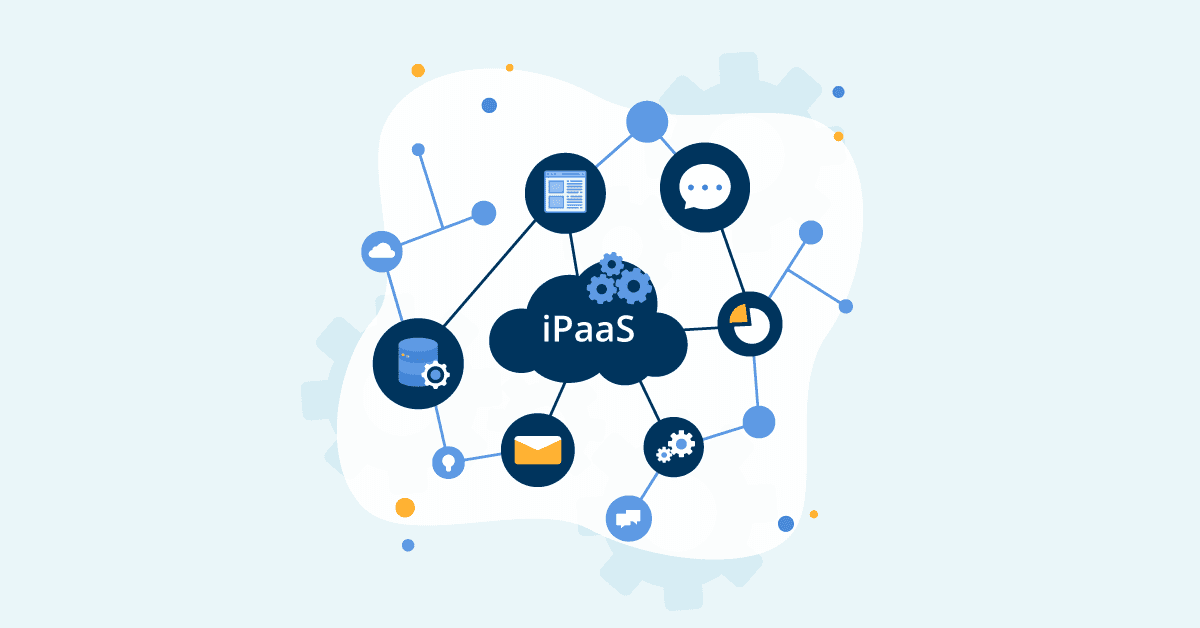
Integration is a critical aspect of every business, and choosing the right Integration Platform-as-a-Service (iPaaS) is vital for organizations looking to accelerate their digital efforts. To select the most suitable iPaaS vendor, it is essential to understand the evolution of iPaaS and the differences between modern and tactical solutions.
Get Started with Aonflow iPaaS – Free Trial Available!
Build and deploy your integrations at zero cost. No credit card required!
iPaaS: Understanding its history
The advent of cloud applications led to the development of a new problem for organizations: data silos across systems and applications. To address this issue, developers initially resorted to writing custom code to connect information from one system to the next. However, this approach resulted in fragile, point-to-point architectures, which created more technical debt. This led to the rise of iPaaS, which is a suite of cloud services that connect any combination of cloud and on-premise technologies. iPaaS enabled businesses to connect data from separate applications, systems, and warehouses, thus breaking down data silos.
iPaaS was so impactful that in 2014, the IT consulting firm Gartner created a new category for iPaaS in their Magic Quadrant analyst reports. However, the rising appeal of iPaaS and the emergence of cloud architectures led to the development of several iPaaS solutions in the market. Some vendors attempted to repurpose old products, a phenomenon referred to as “cloud washing.” Unfortunately, these solutions perpetuated the issues with custom code, leading to a point-to-point architecture that created technical debt at an even faster rate.
Tactical iPaaS: Understanding the unexpected consequences
Modern iPaaS offers significant value to organizations by automating routine tasks for individual users with little to no DevOps required. However, many iPaaS vendors position themselves as enterprise solutions while the real value is only for individual users. It is important to realize that achieving seamless integration and intelligent automation does not simply depend on automating every task with little involvement from DevOps.
The ability to automate routine tasks can certainly increase productivity and efficiency for individual users. Still, it does not solve the problem of data silos across systems and applications. In contrast, efficient, effective, and cost-effective integration can be achieved by using seamless integration and intelligent automation to connect data from various systems and applications.
Many iPaaS solutions in the market aim to cut corners by repackaging old products, which results in a tactical iPaaS solution that perpetuates the issues with custom code. This approach creates technical debt, which can ultimately hinder the growth of a business. Therefore, it is crucial to select a modern iPaaS solution that enables seamless integration and intelligent automation and addresses the issue of data silos while also reducing technical debt.
While automating routine tasks is essential, it is crucial to recognize that the real value of iPaaS lies in seamless integration and intelligent automation. Selecting a modern iPaaS solution that delivers these capabilities while reducing technical debt can significantly accelerate a business’s digital efforts and provide a competitive edge.
Point-To-Point Integration: The trap
Many businesses fall into the trap of selecting iPaaS vendors who claim to offer “instant integration to everything.” These vendors usually target small or medium-sized companies that are in the initial stages of integration. They promise quick and easy connectivity at an affordable cost. This solution might seem attractive to organizations that only have two or three systems to integrate.
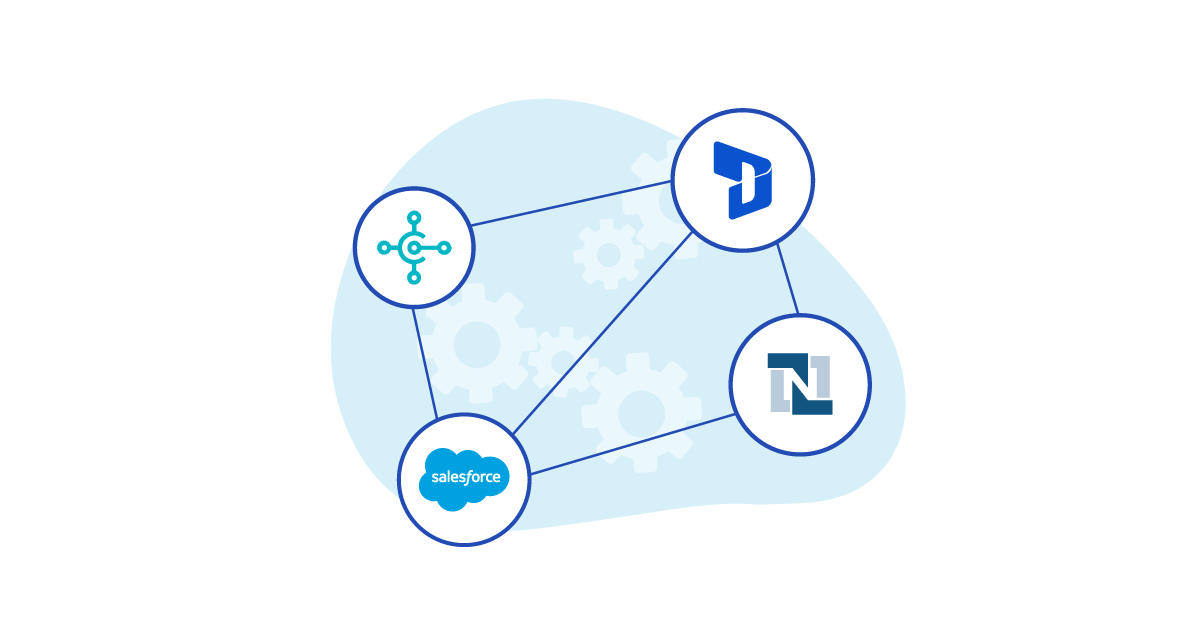
However, this approach has a catch. While businesses are focused on meeting revenue targets, growth goals, and customer commitments, tactical iPaaS vendors are only concerned with their success. They avoid discussing growth with their clients because they know that their products are not designed to support the long-term growth of businesses.
The danger of tactical iPaaS solutions is that they create a point-to-point architecture that perpetuates the problems with custom code. This approach increases technical debt, making it challenging for businesses to achieve sustainable growth in the long run. Moreover, these solutions are not scalable, and they can’t handle the complexity of large enterprises.
To avoid falling into the point-to-point integration trap, businesses should select a modern iPaaS solution that offers seamless integration, intelligent automation, and scalability. A modern iPaaS solution should support the growth of a business by reducing technical debt, enabling quick and easy integration of new systems and applications, and providing insights that can help organizations make informed decisions.
In conclusion, businesses should be cautious when selecting an iPaaS vendor. They should avoid tactical solutions that can trap them in a point-to-point architecture and instead select modern iPaaS solutions that support sustainable growth. By investing in a modern iPaaS solution, businesses can achieve seamless integration, intelligent automation, and scalability, which are essential for success in today’s digital landscape.
What happens when companies scale?
As companies grow, their IT architecture becomes more complex, and IT departments begin to look for solutions to synchronize data. Many organizations start their journey by implementing contemporary cloud-based software such as Salesforce. Such applications reduce the complexity of core business processes and enable employees to work more efficiently. Once organizations start relying on two or more systems to keep the business running, point-to-point integration becomes the norm.
Point-to-point integration involves finding a cost-effective and easy way to push data from one point to another. While this approach may work in the early stages of growth, it can quickly become problematic as the company expands. As new systems are added, point-to-point integrations multiply, leading to data silos and a fragmented IT landscape. To keep pace with the demands of growth, companies need to shift their integration strategy from tactical to modern.
Aonflow is the leading integration platform.
You can kick-start by integrating your first-ever workflow in just a matter of minutes.
Understanding Point-To-Point integration
Point-to-point integration is an integrated approach that involves connecting two systems directly to each other using custom code or pre-built connectors. This method is typically used in the early stages of a company’s growth when they have a small number of systems to integrate. The goal of point-to-point integration is to enable the transfer of data from one system to another with minimal cost and complexity.
The advantage of P2P integration is that it is a simple approach that requires no additional software. This makes it an attractive solution for small businesses with limited IT resources. However, as a company grows and the number of systems they use increases, point-to-point integration can become problematic.
One major issue with point-to-point integration is that it can lead to a fragmented IT landscape with data silos. Each new integration adds another point-to-point connection, making it increasingly difficult to manage and maintain the connections between systems. This can lead to data inconsistencies, errors, and delays in data processing.
Another issue with point-to-point integration is that it can create technical debt. As more systems are added and more point-to-point connections are created, the complexity of the integrations increases. This makes it more difficult to maintain and update the integrations, and it can also make it harder to add new systems in the future.
P2P integration is a useful approach for small businesses with limited resources and a small number of systems to integrate. However, as a company grows and the number of systems they use increases, point-to-point integration can become problematic and lead to a fragmented IT landscape with data silos and technical debt. Companies need to shift their integration strategy from tactical to modern to keep pace with the demands of growth.
P2P integration impact on the infrastructure
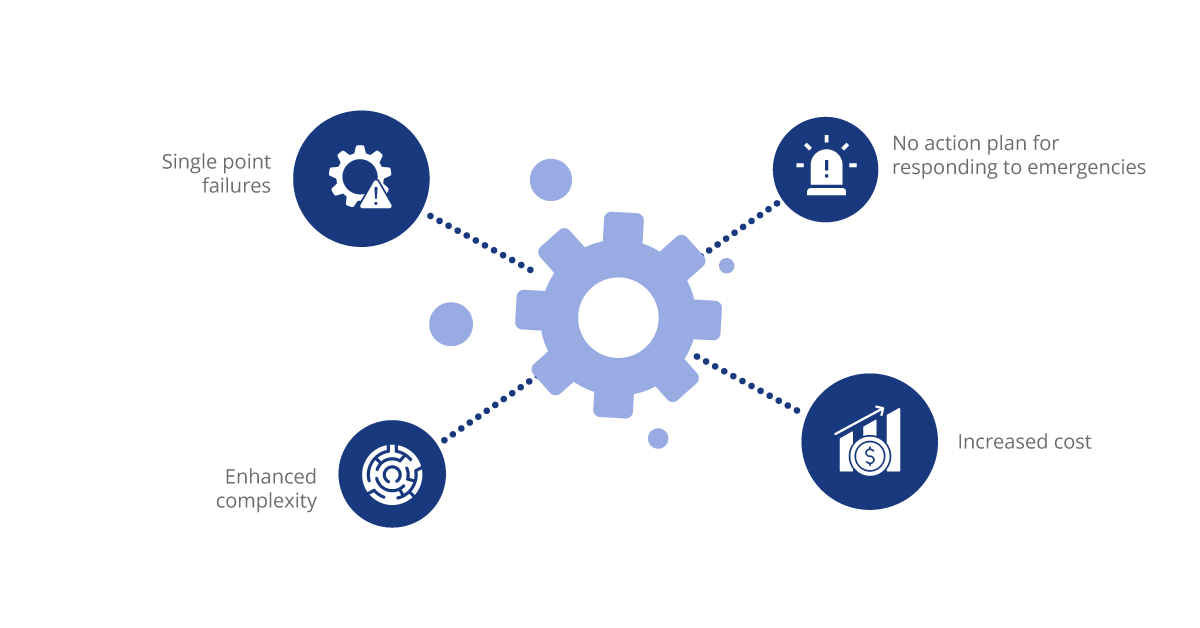
Enhanced Complexity:
As businesses grow, the complexity of their IT architecture increases, and integrating with partners becomes crucial for their business model. However, relying on point-to-point connections becomes problematic as the number of architectural components increases. It may seem manageable with only a few systems, but the number of connections required to integrate a larger number of components increases exponentially. This exponential increase in complexity makes it challenging to manage and maintain, leading to potential integration issues and increased costs. Companies need to consider alternative integration solutions to avoid these issues and ensure scalability as they grow.
Single Point Failures:
When it comes to integration architecture, it is crucial to avoid single points of failure at all costs. Integration components, due to their central location in the network, have the potential to become a massive point of failure. This can significantly impact the reliability of the architecture and lead to a chain reaction of failures throughout the system. Therefore, it is essential to design the integration architecture with a focus on redundancy and failover mechanisms to ensure business continuity.
No Action Plan For Responding To Emergencies:
When it comes to integration architecture, it is essential to have a plan in place for emergency response. Single-purpose and tightly coupled connectors can be problematic as they can make your architecture vulnerable to a simple security patch that can render your systems incompatible with your connector model. This can cause a major disruption in your entire network, leading to operational downtime and decreased reliability. To fix this issue, you need to undertake a multi-step process of re-factoring, developing, testing, and deploying, which can be time-consuming and expensive. Therefore, it is important to adopt an integration architecture that provides flexibility and scalability to adapt to changing circumstances and reduce the impact of single points of failure.
Increased Cost Due To Tactical Tooling:
Using tactical tooling, which provides a point-to-point integration approach, can add additional costs to an organization. This is because such tooling may require purchasing add-ons for essential capabilities, such as API management, which can significantly increase expenses. Furthermore, using such an approach can slow down the time to market, affecting long-term operations, and increasing risks and security issues.
Final thoughts
While connecting systems and applications is an essential feature of iPaaS, it’s not the only factor that makes up a robust iPaaS solution. Other crucial elements of a strong iPaaS solution include flexibility, scalability, security, and real-time data integration capabilities.
A reliable iPaaS solution should also support a wide range of integration patterns and offer pre-built connectors to popular applications and systems. Furthermore, it should provide a user-friendly interface with self-service capabilities, allowing users to easily manage and monitor their integrations.
An excellent iPaaS solution also provides comprehensive support for developers, including API management, application lifecycle management, and DevOps automation features. It should offer a comprehensive integration platform with advanced features that cater to the unique requirements of modern businesses.
Get Started with Aonflow iPaaS – Free Trial Available!
Build and deploy your integrations at zero cost. No credit card required!