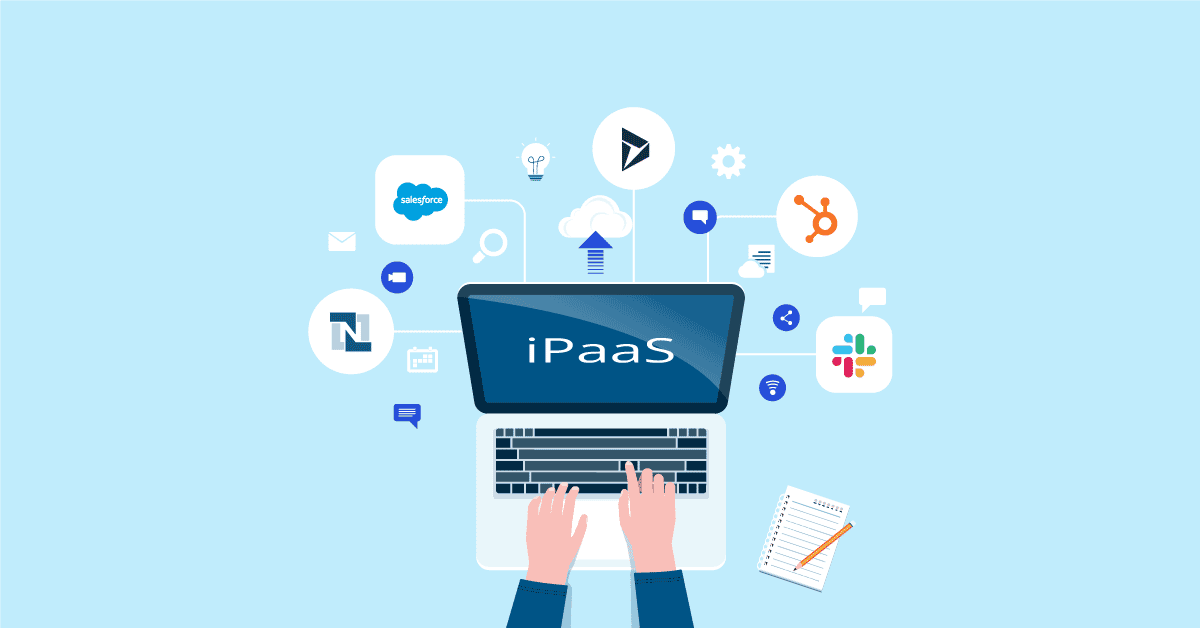
Integration has been a crucial aspect of business for years, but for many companies, it’s often an afterthought. When integration does finally become a priority, companies often rely on a hodgepodge of solutions that may not address their specific needs. Native integrations, which are built into the software, can be convenient and cost-effective, but they often lack the flexibility and customization capabilities to address unique business processes.
Third-party point-to-point connectors may also seem like a good solution, but they are often domain-specific and can’t accommodate larger business processes. DIY integrations, while customizable, require trained technical resources and can be time-consuming to build and maintain. In today’s digital age, it’s more important than ever for companies to have a reliable and effective integration solution to streamline their operations and drive business growth.
Get Started with Aonflow iPaaS – Free Trial Available!
Build and deploy your integrations at zero cost. No credit card required!
What is an iPaaS?
iPaaS (Integration Platform as a Service) is a cloud-based platform that simplifies the process of connecting applications and business processes. It provides a standardized way to add applications to an organization, allowing for the easy transfer of data between them while providing critical out-of-the-box integration functionality. iPaaS is particularly useful for growing companies as it streamlines the process of monitoring, maintaining, and updating integrations across applications, which may change frequently.
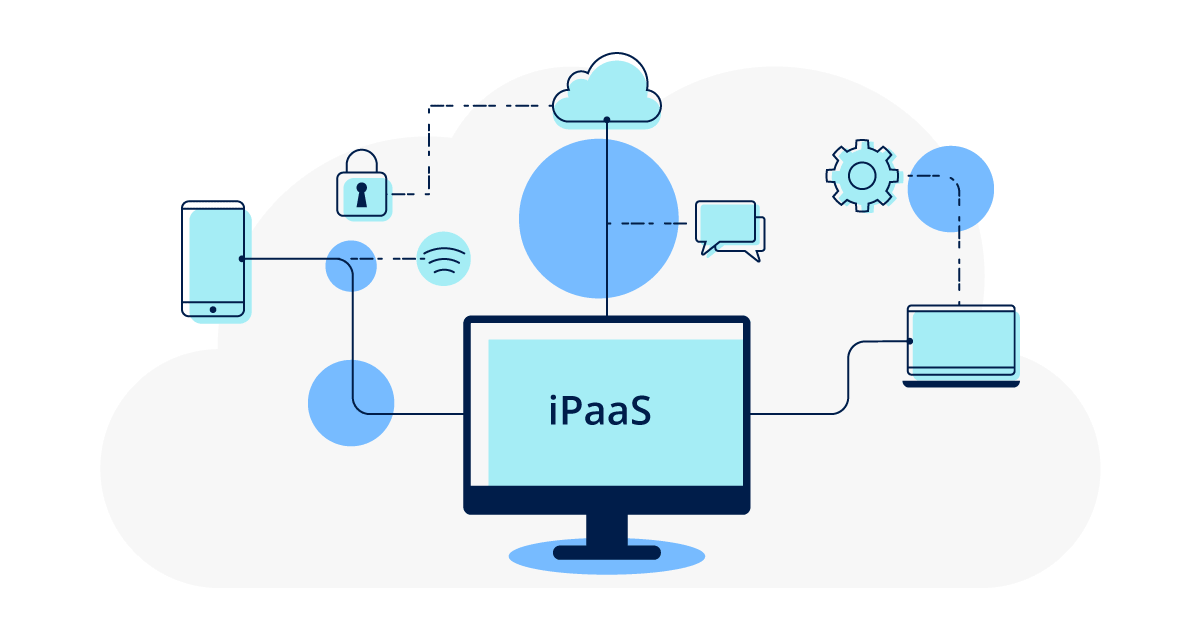
With iPaaS, both non-technical and technical users can build, manage, and maintain integrations, making it a versatile solution for organizations of all sizes. By leveraging iPaaS, companies can quickly and easily integrate applications into their business processes, saving time and resources.
iPaaS is a powerful tool that helps organizations to streamline their integration efforts and improve efficiency. With iPaaS, organizations can easily connect their systems and applications without the need for complex and time-consuming custom coding. This saves both time and resources, allowing organizations to focus on their core business activities.
In addition to streamlining the integration process, iPaaS also provides a high level of security. By using iPaaS, organizations can ensure that their data is protected and compliant with relevant regulations and standards. This is especially important in today’s digital age, where data breaches and cyber attacks are becoming increasingly common.
Another key benefit of iPaaS is its scalability. As businesses grow and evolve, they often need to add or modify their systems and applications to meet new needs. With iPaaS, organizations can easily scale up or down as needed, without the need for additional infrastructure or maintenance. This allows businesses to adapt and grow as needed, without being held back by outdated or inflexible systems.
iPaaS is an attractive option for organizations of all sizes, as it is highly versatile and can be customized to meet the specific needs and goals of each organization. It is particularly useful for organizations with complex IT environments, as it allows them to easily connect and manage multiple systems and applications.
iPaaS is a valuable tool for organizations looking to streamline and scale their integration processes while maintaining a high level of security. It is an essential tool for organizations in today’s digital age, as it enables them to easily connect and manage their systems and applications, improving efficiency and enabling them to focus on their core business activities.
Aonflow is the leading integration platform.
You can kick-start by integrating your first-ever workflow in just a matter of minutes.
The Advent of iPaaS
The concept of iPaaS has been around for several decades, but it has evolved significantly over time. Here’s a more in-depth look at the advent of iPaaS, its history, and the reasons why it came into existence:
The iPaaS concept can be traced back to the early days of enterprise software integration when organizations first began using middleware solutions to connect their systems and applications. These solutions were typically expensive and required custom coding, making them difficult and time-consuming to implement.
One of the main drivers behind the development of middleware solutions was the increasing complexity of modern IT environments. As organizations relied on more and more systems and applications to operate, the need for a way to connect and manage these systems became pressing. Middleware solutions were designed to fill this need, providing a way to connect and integrate various systems and applications.
However, while middleware solutions were effective at connecting systems, they were often expensive and required significant resources to implement. This made them difficult and time-consuming to use, particularly for smaller organizations.
The Evolution of iPaaS
With the advent of the cloud and the proliferation of SaaS (Software as a Service) applications, iPaaS began to emerge as a more viable and cost-effective solution for integration. These early iPaaS solutions were focused on connecting SaaS applications and were often limited in terms of the systems and technologies they could integrate.
However, as iPaaS solutions evolved, they began to support a wider range of integration scenarios and technologies. Today’s iPaaS platforms are highly versatile and can connect a wide range of systems and applications, both within and outside an organization. This includes everything from CRM and ERP systems to social media and marketing tools.
In addition to expanding the types of systems and technologies they can integrate, iPaaS solutions have also become more user-friendly and easier to implement. Today’s iPaaS platforms often feature intuitive drag-and-drop interfaces and pre-built connectors, making it easy for organizations to connect their systems and applications without the need for custom coding.
Reasons for the Advent of iPaaS
So why did iPaaS come into existence, and why has it evolved? There are several reasons for the advent and evolution of iPaaS, including;
- The increasing complexity of modern IT environments: As organizations rely on more and more systems and applications to operate, the need for a scalable and flexible integration solution has become increasingly pressing. iPaaS has emerged as a powerful tool to meet this need, allowing organizations to connect easily and manage their systems and applications.
- The proliferation of SaaS applications: The proliferation of SaaS applications has also played a role in the evolution of iPaaS. With more and more organizations using SaaS applications, the need for a way to easily connect and integrate these applications has grown. iPaaS has emerged as a solution to meet this need.
- Cost and time savings: iPaaS solutions are often more cost-effective and time-efficient than traditional integration solutions, such as custom coding. This has made iPaaS an attractive option for organizations looking to streamline their integration efforts.
- Scalability: iPaaS solutions are highly scalable, making it easy for organizations to adapt and grow as needed.
- Customizability: iPaaS solutions are also highly customizable, allowing organizations to tailor the platform to meet their specific needs and goals. This includes the ability to integrate a wide range of systems and applications, as well as the ability to customize integration processes and workflows.
- Improved efficiency: By enabling seamless communication and data exchange between systems and applications, iPaaS helps organizations operate more efficiently and effectively. This can help to improve productivity and reduce costs.
- Enhanced security: iPaaS provides a high level of security, ensuring that data is protected and compliant with relevant regulations and standards. This is especially important in today’s digital age, where data breaches and cyber attacks are becoming increasingly common.
The advent and evolution of iPaaS have been driven by the increasing complexity of modern IT environments and the need for a scalable and flexible integration solution. Today’s iPaaS platforms are highly versatile and user-friendly, making it easy for organizations to connect and manage their systems and applications, while also ensuring data security and compliance. As more and more businesses rely on multiple systems and applications to operate, the use of iPaaS is likely to continue to grow in popularity.
Integration Challenges Faced in Today’s Day and Age
Integration has long been a challenge for organizations, as they seek to connect and manage multiple systems and applications to enable seamless communication and data exchange. Over the years, the challenges of integration have evolved and changed as technology has advanced and organizations have become more reliant on complex IT environments. Here’s a look at the challenges of integration in the past and today:
Past Challenges: In the early days of enterprise software integration, the main challenge was the lack of viable solutions. Organizations were forced to rely on expensive and complex middleware solutions, which required significant resources and custom coding to implement. These solutions were often difficult to use and maintain, making integration a time-consuming and costly endeavor.
As technology advanced and more organizations began using SaaS (Software as a Service) applications, the challenges of integration shifted. One of the main challenges was the lack of standardization among SaaS applications, which made it difficult to connect and integrate these applications with other systems. This required organizations to rely on custom coding and integration efforts, which were both time-consuming and costly.
Today’s Challenges: While technology has come a long way in recent years, integration remains a challenge for many organizations. Here are a few of the challenges organizations face today:
- The complexity of modern IT environments: As organizations rely on more and more systems and applications to operate, the need for a scalable and flexible integration solution has become increasingly pressing. Connecting and managing multiple systems and applications can be complex and time-consuming, particularly in large organizations with complex IT environments.
- Lack of standardization: While there has been some progress in terms of standardization among SaaS applications, integration remains a challenge due to the lack of standardization among different systems and technologies. This can make it difficult to connect and integrate various systems and applications.
Security concerns: Ensuring the security and compliance of data is a major concern for many organizations. Integration can introduce security risks, as data is transferred between systems and applications. Ensuring the security of this data is critical, but it can also be a challenge.
Cost and resources: Integration can be a costly and resource-intensive process, particularly if organizations rely on custom coding and integration efforts. This can be a significant barrier for small and medium-sized organizations with limited resources.
Overall, the challenges of integration have evolved over the years as technology has advanced and organizations have become more reliant on complex IT environments. Today, organizations face a range of challenges, including the complexity of modern IT environments, the lack of standardization among systems and technologies, security concerns, and the cost and resources required for integration.
How should organizations and businesses address these integration challenges?
Integration remains a challenge for many organizations and businesses, as they seek to connect and manage multiple systems and applications to enable seamless communication and data exchange.
To address these challenges, there are several steps organizations and businesses can take:
Adopt a cloud-based integration platform: One of the most effective ways to address the challenges of integration is to adopt a cloud-based integration platform, such as an Integration Platform as a Service (iPaaS). iPaaS is a scalable and flexible solution that enables organizations to easily connect, integrate, and manage multiple systems and applications. It provides a secure and scalable way to connect various systems, both within and outside an organization, to enable seamless communication and data exchange.
Utilize pre-built connectors and templates: Many iPaaS solutions come with pre-built connectors and templates that make it easy for organizations to connect their systems and applications. These connectors and templates can significantly reduce the time and resources required for integration, making it easier and more cost-effective for organizations to connect their systems and applications.
Invest in training and resources: To effectively address the challenges of integration, organizations, and businesses should invest in training and resources. This includes providing employees with the necessary skills and knowledge to work with integration platforms and tools, as well as investing in the infrastructure and resources needed to support integration efforts.
Ensure data security and compliance: Ensuring the security and compliance of data is critical when integrating systems and applications. Organizations and businesses should take steps to secure their data and ensure that it is compliant with relevant regulations and standards. This may include implementing security protocols and regularly updating software and systems to stay current with security best practices.
Collaborate with partners and vendors: Integration often involves working with partners and vendors to connect systems and applications. To address the challenges of integration, organizations, and businesses should work closely with these partners and vendors to ensure that integration efforts are successful. This may include establishing clear communication channels, defining roles and responsibilities, and establishing integration processes and protocols.
Plan for the long term: Integration is an ongoing process, and organizations and businesses should plan for the long term. This includes regularly reviewing and updating integration efforts to ensure that they are aligned with business goals and objectives, as well as assessing the need for new integrations as business needs evolve.
Consider using a managed services provider: For organizations and businesses that don’t have the resources or expertise to manage integration efforts in-house, working with a managed services provider can be a good option. Managed services providers can handle the day-to-day management of integration efforts, freeing up organizations and businesses to focus on their core business activities.
There are several steps organizations and businesses can take to address the challenges of integration. By adopting a cloud-based integration platform, utilizing pre-built connectors and templates, investing in training and resources, ensuring data security and compliance, collaborating with partners and vendors, planning for the long term, and considering using a managed services provider, organizations and businesses can effectively address the challenges of integration and enable seamless communication and data exchange between systems and applications.
It’s important to note that integration challenges can vary depending on the specific needs and goals of an organization or business. As such, organizations and businesses need to assess their own integration needs and develop a plan that addresses their unique challenges and goals. This may involve working with a managed services provider, implementing a cloud-based integration platform, or taking other steps to ensure that integration efforts are successful.
In today’s digital age, the ability to effectively connect and integrate systems and applications is critical for organizations and businesses of all sizes. By addressing the challenges of integration, organizations, and businesses can improve efficiency, reduce costs, and better serve their customers. Whether through the use of a cloud-based integration platform, the implementation of best practices, or the adoption of other strategies, organizations, and businesses can effectively address the challenges of integration and achieve their integration goals.
How Does iPaaS Work?
iPaaS provides a range of tools and capabilities for data integration, application integration, and business process automation.
It can connect different applications and systems using connectors. These connectors are pre-built integrations that allow users to quickly and easily connect different applications and systems without the need for custom coding. For example, a connector might allow an organization to connect its CRM system to its marketing automation tool, enabling the transfer of customer data between the two systems.
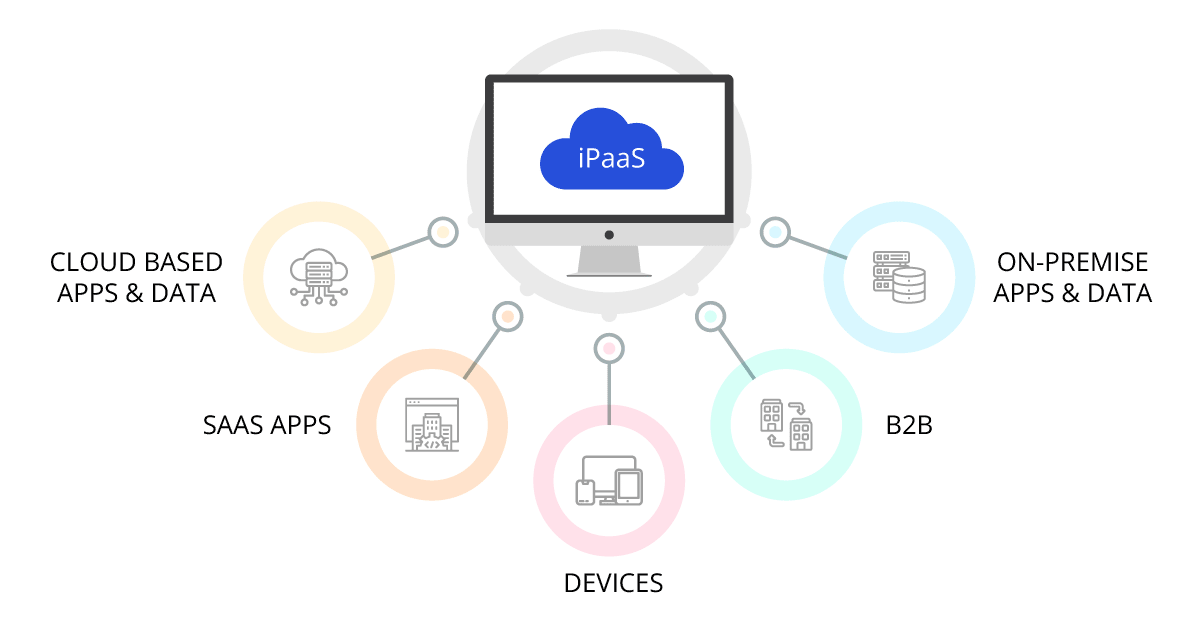
In addition to connectors, iPaaS also provides a range of tools and capabilities for data integration. This includes the ability to extract, transform, and load (ETL) data from various sources, as well as the ability to perform real-time data integration. This enables organizations to manage and integrate their data consistently and efficiently, making it easier to use data to inform business decisions.
iPaaS can automate business processes. This can include automating the flow of data between different applications and systems, as well as automating other business processes such as invoicing, HR processes, and customer service. iPaaS provides a range of tools and capabilities for business process automation, including the ability to create custom workflows and the ability to integrate with other tools and platforms such as robotic process automation (RPA).
How Do Companies/Organizations/Businesses Use iPaaS?
Integration has long been a key aspect of business, but for many companies, it often takes a backseat to other priorities. As a result, integration projects are often tackled haphazardly, relying on a variety of solutions that may not be well-suited to the company’s specific needs. In today’s digital age, it’s more important than ever for companies to prioritize integration and choose a reliable solution that can streamline their operations and drive business growth.
Native Integration
Native integrations, which are built into the software, allow users to easily connect with specific applications. These integrations are often convenient and cost-effective, covering a wide range of popular use cases. For example, almost all marketing automation tools today come with native integrations that allow users to connect directly to Salesforce. These integrations are usually included at no additional cost and can be a quick and easy way to connect systems and applications.
However, it’s important to note that native integrations are typically designed to sell and renew the vendor’s offering and may not offer enough flexibility or customization capabilities to address unique business needs. They may also not be updated as frequently as desired, which can limit their effectiveness for certain use cases. While native integrations can be a good starting point for integration, it’s important for companies to carefully evaluate their needs and consider other options, such as third-party connectors or custom integrations, if native integrations don’t fully meet their requirements.
It’s also worth noting that relying solely on native integrations can limit an organization’s integration capabilities and create vendor lock-in. This can be a problem for organizations that want to maintain flexibility and control over their integration strategy. By considering other options, such as third-party connectors or custom integrations, organizations can build a more diverse and robust integration strategy that meets their specific needs and goals.
That said, native integrations can be a convenient and cost-effective option for quickly connecting specific systems and applications. However, it’s important for organizations to carefully evaluate their needs and consider other options if native integrations don’t fully meet their requirements. By building a diverse and flexible integration strategy, organizations can better support their business objectives.
Third-Party Point-to-Point Integration
Third-party point-to-point connectors, like native integrations, may initially seem like a convenient and cost-effective solution for connecting systems and applications. However, these connectors are often domain-specific and may not have the flexibility to accommodate larger or more complex business processes. In today’s digital landscape, with thousands of cloud applications available, it can be difficult to develop individual point-to-point connectors for every possible combination of business applications. As a result, companies may need to consider other options, such as custom integrations or more comprehensive integration platforms, to fully support their integration needs.
While point-to-point connectors may be useful for certain specific use cases, they may not be the best choice for organizations with complex or evolving integration needs. Custom integrations or integration platforms may offer more flexibility and customization capabilities, allowing organizations to more easily adapt to changing business requirements. By carefully evaluating their integration needs and considering a variety of options, organizations can build a robust and flexible integration strategy that meets their specific goals and needs.
It’s also worth noting that relying on multiple point-to-point connectors can quickly become unmanageable as an organization’s integration needs grow and evolve. This can lead to maintenance and scalability issues, as well as an increased risk of errors and data inconsistencies. By choosing a more comprehensive integration solution, such as a custom integration or integration platform, organizations can better manage their integration efforts and reduce the risk of these issues.
Do-It-Yourself (DIY) Integration
These are custom integrations built using code and APIs and can be a powerful solution for organizations with specific integration needs. These integrations can be tailored to meet the unique requirements of an organization and are often the preferred choice for many operational teams. However, building custom integrations can be time-consuming and requires trained technical resources, which can make it difficult to build and maintain them in a scalable and robust way. For example, integrating systems and applications requires critical functionality such as error handling and guaranteed data delivery, which can be challenging to implement from scratch for every integration. Additionally, as business processes change, these custom integrations must be carefully maintained and updated to ensure they continue to meet the organization’s needs.
DIY integrations can be a powerful solution for organizations with specific integration needs, but they require careful planning and resources to build and maintain. By carefully evaluating their needs and considering other options, such as native integrations or integration platforms, organizations can build a robust and flexible integration strategy.
Aonflow is the leading integration platform.
You can kick-start by integrating your first-ever workflow in just a matter of minutes.
Key Features & Components of iPaaS
Here’s a look at the key features and components of iPaaS.
Connectivity: One of the main features of iPaaS is its ability to enable organizations to easily connect their systems and applications, both within and outside the organization. This includes the ability to connect a wide range of systems and applications, such as CRM, ERP, and HR systems. iPaaS solutions typically provide a range of pre-built connectors and templates, which make it easy for organizations to connect their systems and applications without the need for complex and time-consuming custom coding.
Integration: iPaaS provides a range of integration capabilities, including the ability to integrate data, processes, and workflows. This enables organizations to seamlessly exchange data and information between systems and applications, improving efficiency and enabling better decision-making. iPaaS solutions typically provide a range of integration options, including point-to-point integration, application programming interface (API) integration, and data integration.
Management: iPaaS provides a range of management tools and capabilities, including the ability to monitor and manage integration processes and workflows. This enables organizations to easily track and manage their integration efforts, helping to ensure that they are running smoothly and effectively. iPaaS solutions typically provide a range of management features, including the ability to track and monitor integration processes, manage user access and permissions, and automate integration tasks.
Customizability: iPaaS solutions are also highly customizable, allowing organizations to tailor the platform to meet their specific needs and goals. This includes the ability to integrate a wide range of systems and applications, as well as the ability to customize integration processes and workflows. Many iPaaS solutions provide a range of customization options, including the ability to define custom integrations, create custom connectors, and customize integration workflows.
Improved efficiency: By enabling seamless communication and data exchange between systems and applications, iPaaS helps organizations operate more efficiently and effectively. This can help to improve productivity and reduce costs. iPaaS solutions typically provide a range of efficiency-enhancing features, including the ability to automate integration tasks, streamline data exchange, and reduce the need for custom coding.
Enhanced security: iPaaS provides a high level of security, ensuring that data is protected and compliant with relevant regulations and standards. This is especially important in today’s digital age, where data breaches and cyber attacks are becoming increasingly common.
Scalability: iPaaS solutions are highly scalable, allowing organizations to easily scale up or down as needed to meet changing business needs. This enables organizations to adapt and grow as needed, without being held back by outdated or inflexible systems. iPaaS solutions typically provide a range of scalability options, including the ability to easily add or remove systems and applications, and the ability to scale up or down as needed.
Cloud-based: iPaaS solutions are typically cloud-based, meaning that they are hosted and managed by a third-party provider. This enables organizations to easily access and use the platform without the need for on-premises infrastructure or maintenance. Cloud-based iPaaS solutions provide a range of benefits, including reduced costs, increased flexibility, and improved security.
User-friendly: iPaaS solutions are typically designed to be user-friendly, making it easy for organizations to connect and manage their systems and applications. Many iPaaS solutions provide a range of user-friendly features, including intuitive interfaces, drag-and-drop functionality, and pre-built connectors and templates.
iPaaS is a powerful tool that enables organizations to easily connect, integrate, and manage their systems and applications. It is an essential tool for organizations in today’s digital age, as it enables them to operate more efficiently and effectively, while also ensuring data security and compliance. By leveraging the key features and components of iPaaS, organizations can streamline their integration efforts, improve efficiency, and better serve their customers.
Get Started with Aonflow iPaaS – Free Trial Available!
Build and deploy your integrations at zero cost. No credit card required!