
Today’s fast-paced digital landscape demands businesses to continually innovate and adapt to stay competitive. Advanced technologies are key enablers in this quest to stay ahead of the curve. Among these technologies, integration solutions stand out for their pivotal role in streamlining operations, enhancing efficiency, and driving growth.
Get Started with Aonflow iPaaS – Free Trial Available!
Build and deploy your integrations at zero cost. No credit card required!
Understanding Traditional Integration in Marketing
Before we explore the transformative power of Integration Platform as a Service (iPaaS), it’s crucial to delve into the landscape of traditional integration methods that have long prevailed in the business realm. Traditional integration, often referred to as on-premises integration, entails the laborious task of connecting disparate systems, applications, and databases using custom code or middleware. This approach, while once the cornerstone of data connectivity, is fraught with challenges that hinder efficiency and impede progress.
1. Custom Code Complexity:
Traditional integration methods typically involve writing custom code to facilitate communication between systems. This code must be meticulously crafted to ensure compatibility and seamless data exchange, often requiring specialized expertise and extensive testing.
2. Middleware Mediation:
Middleware solutions act as intermediaries between disparate systems, translating data formats and protocols to facilitate communication. While middleware can bridge the gap between incompatible systems, managing and maintaining these middleware layers adds complexity and overhead to integration efforts.
3. Time-Consuming Processes:
Integrating systems using traditional methods is a time-consuming endeavor, requiring thorough planning, development, and testing phases. Any changes or updates to integration logic necessitate manual intervention and rigorous testing to ensure continued functionality.
4. Prone to Errors:
Traditional integration processes are inherently prone to errors and inconsistencies, particularly when dealing with complex data transformations or large volumes of data. Even minor discrepancies in data formats or mappings can lead to integration failures and data inconsistencies.
5. Limited Scalability:
As businesses grow and evolve, traditional integration methods often struggle to keep pace with increasing data volumes and expanding requirements. Scaling up infrastructure and resources to accommodate growth requires significant time, effort, and investment.
6. Maintenance Overhead:
Maintaining traditional integration solutions entails ongoing monitoring, troubleshooting, and updates to ensure optimal performance and reliability. Any changes to integrated systems or underlying infrastructure may necessitate modifications to integration logic, further adding to maintenance overhead.
While traditional integration methods have served as the backbone of data connectivity for decades, they are plagued by complexity, inefficiency, and limitations. As businesses strive to adapt to the demands of a rapidly evolving digital landscape, the need for a more agile, scalable, and cost-effective integration solution becomes increasingly apparent. This is where Integration Platform as a Service (iPaaS) emerges as a game-changer, revolutionizing the way businesses approach data integration and paving the way for innovation and growth in the modern era of marketing and beyond.
Challenges in Marketing
Marketing is an ever-evolving field, characterized by dynamic trends, shifting consumer behaviors, and rapidly advancing technologies. In this constantly changing landscape, marketers face a myriad of challenges that can hinder their efforts to reach and engage target audiences effectively. Let’s explore some of the key challenges in marketing:
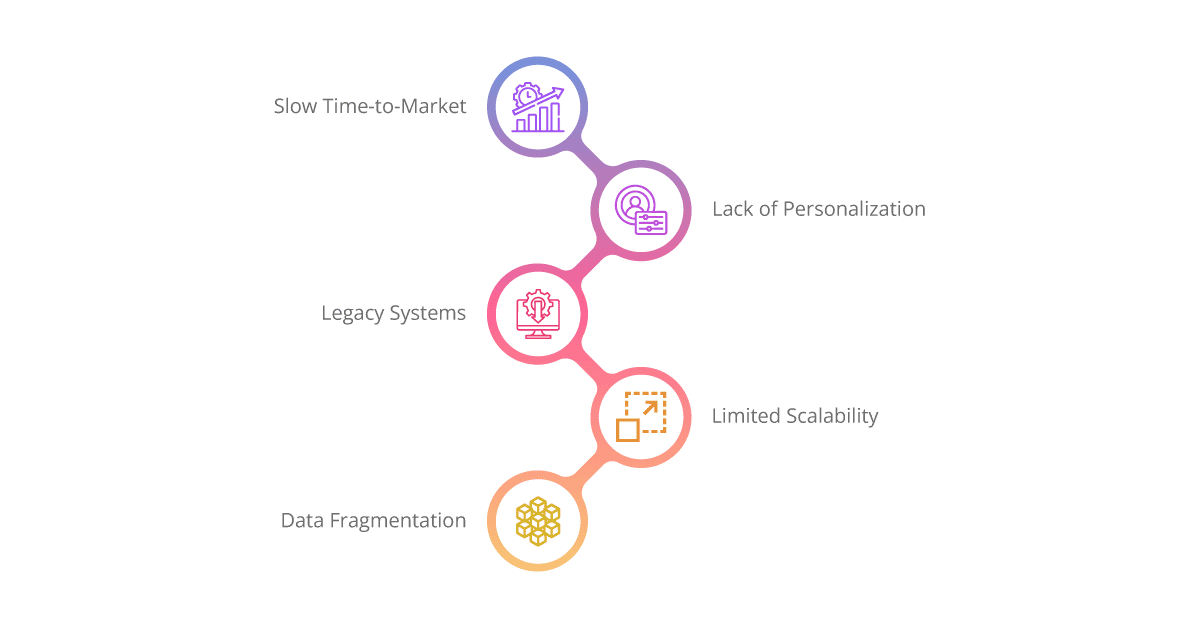
1. Data Fragmentation: One of the most significant challenges faced by marketers is the fragmentation of data across various systems, platforms, and channels. Customer data resides in disparate silos, making it difficult to obtain a unified view of the customer journey and target audiences.
2. Legacy Systems: Many marketing teams still rely on outdated legacy systems and software that lack the flexibility and scalability needed to keep pace with evolving business needs. These legacy systems often result in inefficiencies, manual workarounds, and limited integration capabilities.
3. Slow Time-to-Market: Traditional integration methods require extensive coding, testing, and deployment processes, leading to slow time-to-market for marketing campaigns and initiatives. In today’s fast-paced digital environment, agility and speed are paramount to capitalize on emerging opportunities and stay ahead of competitors.
4. Limited Scalability: As businesses grow and expand their marketing efforts, they often encounter scalability challenges with traditional integration solutions. Scaling up infrastructure and resources to accommodate increasing data volumes and user demands can be complex, time-consuming, and costly.
5. Lack of Personalization: Personalization has become a cornerstone of modern marketing strategies, yet many organizations struggle to deliver tailored experiences due to data silos and disjointed systems. Without a holistic view of customer data, marketers find it challenging to segment audiences effectively and deliver relevant content at the right time.
Solutions Offered by iPaaS to Address Marketing Challenges
iPaaS not only addresses the challenges faced by marketers but also unlocks opportunities for innovation and growth. Here’s how iPaaS solutions tackle marketing challenges:
1. Unified Data Management:
iPaaS serves as a beacon of unity in the fragmented landscape of marketing data. For example, consider a retail company utilizing iPaaS to integrate data from various sources such as its e-commerce platform, CRM system, and social media channels into a centralized data warehouse. This unified data hub becomes the foundation for personalized experiences and targeted campaigns, allowing marketers to leverage comprehensive customer insights to drive engagement and conversion.
2. Agility and Flexibility:
In the fast-paced world of marketing, agility is paramount. iPaaS offers marketers the ability to adapt and iterate with speed and precision. Take, for instance, a marketing agency utilizing iPaaS to rapidly deploy integrations between its clients’ various marketing platforms, including email marketing tools, advertising platforms, and customer databases. With iPaaS’s rapid deployment capabilities, marketers can respond quickly to changing campaign requirements and capitalize on emerging opportunities, ensuring maximum campaign effectiveness.
3. Enhanced Collaboration:
Collaboration is the lifeblood of successful marketing campaigns. iPaaS fosters collaboration by providing a centralized platform for data integration and management. For example, imagine a global corporation using iPaaS to integrate data from its regional marketing teams’ CRM systems, marketing automation platforms, and customer feedback tools. Real-time data access and visibility empower cross-functional teams to collaborate seamlessly, share insights, and align strategies toward common goals, resulting in more cohesive and effective marketing initiatives.
4. Improved Customer Experience:
At the heart of every successful marketing strategy lies a commitment to delivering exceptional customer experiences. iPaaS empowers marketers to achieve this goal by enabling personalized, omni-channel experiences. Consider a hospitality company leveraging iPaaS to integrate data from its website, mobile app, and loyalty program into a centralized customer database. By analyzing this unified data, marketers can personalize interactions with customers across various touchpoints, delivering tailored content, offers, and recommendations in real time, thereby enhancing customer satisfaction and loyalty.
5. Cost-Efficiency:
In an era of tightening budgets and increasing scrutiny, cost efficiency is a top priority for marketers. iPaaS offers a cost-effective alternative to traditional integration methods with its pay-as-you-go pricing models and minimal upfront investment. For example, a startup e-commerce business may opt for iPaaS to integrate its e-commerce platform with its email marketing software and inventory management system. With iPaaS’s cloud-based infrastructure, the need for costly hardware and maintenance is eliminated, allowing organizations to optimize resources and allocate budgets more efficiently, ultimately maximizing their return on investment.
iPaaS solutions offer a myriad of solutions to address the challenges faced by marketers in today’s digital landscape. From unified data management and agility to enhanced collaboration, improved customer experiences, and cost-efficiency, iPaaS empowers marketers to drive innovation, engagement, and growth. As the marketing landscape continues to evolve, iPaaS will remain a cornerstone of successful marketing strategies, enabling marketers to thrive in an increasingly competitive and dynamic environment.
Aonflow is the leading integration platform.
You can kick-start by integrating your first-ever workflow in just a matter of minutes.
Use Cases on How iPaaS can help in the Marketing field
Integration of CRM Systems with Marketing Automation Platforms:
iPaaS can seamlessly connect Customer Relationship Management (CRM) systems like Salesforce with marketing automation platforms such as Aonflow, HubSpot or Marketo. This integration ensures that customer data is synchronized across platforms, enabling personalized marketing campaigns based on customer interactions and behaviors.
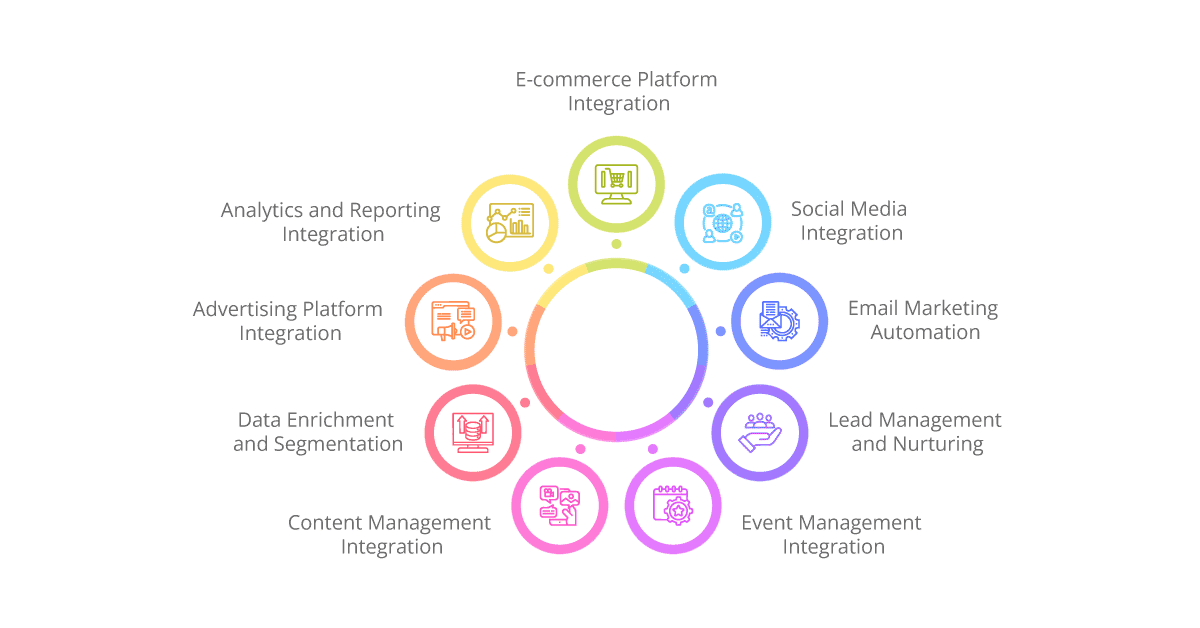
E-commerce Platform Integration:
iPaaS can integrate e-commerce platforms like Shopify or Magento with marketing systems, allowing marketers to access real-time sales data, track customer purchases, and trigger targeted marketing campaigns such as abandoned cart reminders or personalized product recommendations.
Social Media Integration:
iPaaS can integrate social media platforms like Facebook, Twitter, and Instagram with marketing tools, enabling marketers to monitor social media interactions, analyze engagement metrics, and schedule posts for optimal reach and engagement.
Email Marketing Automation:
iPaaS can connect email marketing platforms such as Mailchimp or Constant Contact with customer databases and CRM systems. This integration enables marketers to automate email campaigns, segment audiences based on demographics or behaviors, and track email performance metrics.
Lead Management and Nurturing:
iPaaS can facilitate the integration of lead generation tools with CRM systems and marketing automation platforms. This integration streamlines lead management processes, allowing marketers to capture, qualify, and nurture leads more effectively through targeted follow-up campaigns.
Event Management Integration:
iPaaS can integrate event management platforms like Eventbrite or Cvent with marketing systems, enabling marketers to manage event registrations, track attendee engagement, and follow up with personalized communications before and after events.
Content Management Integration:
iPaaS can connect content management systems (CMS) like WordPress or Drupal with marketing automation platforms, allowing marketers to publish, manage, and analyze content performance seamlessly. This integration streamlines content marketing efforts and enables data-driven content strategies.
Data Enrichment and Segmentation:
iPaaS can integrate with third-party data enrichment services to augment existing customer data with additional insights such as demographics, firmographics, or behavioral data. Marketers can use this enriched data to segment audiences more effectively and personalize marketing campaigns.
Advertising Platform Integration:
iPaaS can integrate with advertising platforms such as Google Ads or Facebook Ads Manager, enabling marketers to synchronize audience lists, track ad performance, and optimize advertising spend based on real-time campaign data.
Analytics and Reporting Integration:
iPaaS can integrate with analytics platforms like Google Analytics or Adobe Analytics, consolidating data from various sources to provide a comprehensive view of marketing performance. Marketers can generate custom reports, analyze key metrics, and derive actionable insights to optimize marketing strategies and campaigns.
Conclusion
iPaaS represents a paradigm shift in the realm of integration solutions, offering unparalleled benefits for marketing professionals across industries. By embracing cloud-based integration, businesses can unlock new levels of agility, efficiency, and innovation, positioning themselves for success in an increasingly digital world. Whether you’re a small startup looking to scale rapidly or a multinational corporation seeking to streamline operations, iPaaS holds the key to unlocking your full potential in the ever-evolving landscape of marketing technology.
Get Started with Aonflow iPaaS – Free Trial Available!
Build and deploy your integrations at zero cost. No credit card required!