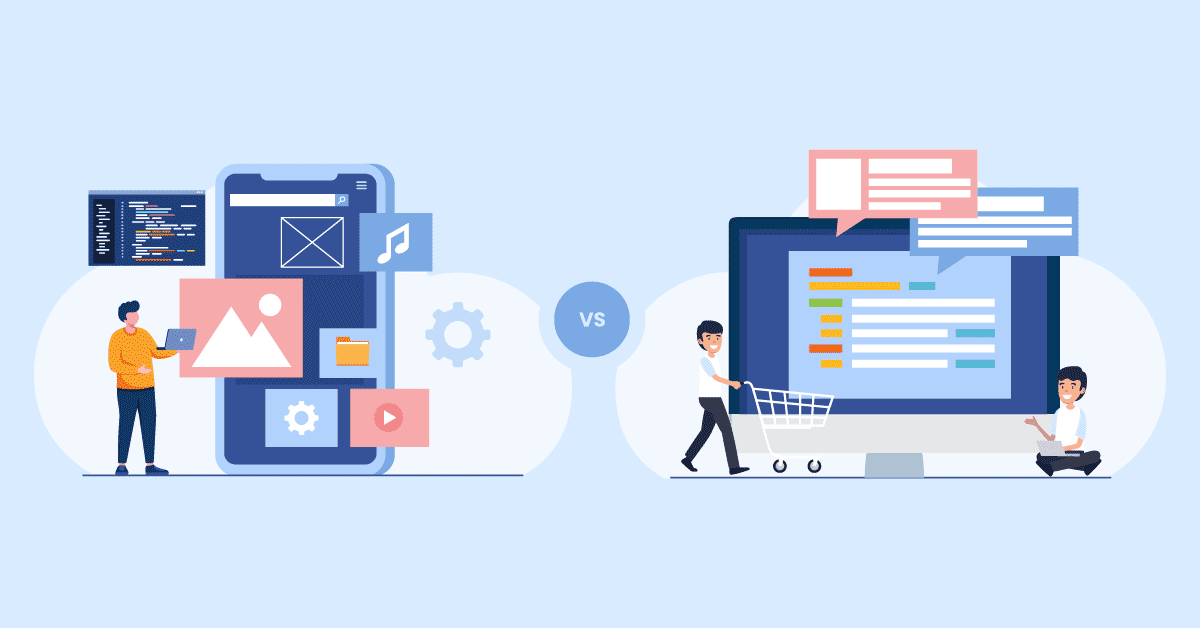
The cost of integration can be a significant burden for enterprise IT organizations. According to a survey conducted in 2018, the majority of the $800 billion spent on integrations was allocated to maintaining existing systems rather than investing in innovations. Imagine the potential benefits if this budget was redirected towards projects that could help advance the business instead of merely maintaining its current state.
Get Started with Aonflow iPaaS – Free Trial Available!
Build and deploy your integrations at zero cost. No credit card required!
The integration requirements demanded by today’s digital transformation initiatives are incredibly complex and are often left as an afterthought by business leaders, leaving IT to handle the execution. Unfortunately, this lack of forethought is a leading cause of failure for these initiatives. To create meaningful digital interactions, all relevant systems’ data must be accessible and interconnected. However, many of these systems were not designed to function in today’s interconnected world. Therefore, the challenge is twofold: to ensure that critical data is accessible and to adapt existing systems to meet the demands of modern integration.
To succeed, it is essential to unlock systems that were not originally designed for modern use. This may involve adapting existing systems to work with new technology or integrating them with other systems to create a more comprehensive solution. However, it is also important to think about the future and build with patterns that are reusable and can minimize the cost of maintenance and maximize agility. By doing so, businesses can create a more adaptable and scalable infrastructure that can evolve with changing needs and technology.
Traditional systems integration involves connecting systems directly to one another, with all business and transformation logic embedded within code on either side of the integration. These point-to-point integrations can be fragile and difficult to maintain or enhance. They can also create a “big ball of mud” where everything is interconnected and complex, leading to further complications as new integrations are added.
There is a different approach called API-led connectivity, which uses APIs with contract-based inputs and outputs as building blocks in a multi-tiered integration architecture. This approach allows for the growth of APIs while reducing the complexity of each new integration. It also decouples each system from the overall integration logic, enabling modifications, sunsets, or swaps without disrupting other systems or integrations. The result is greater agility for organizations, allowing them to increase the speed of their business operations.
API-led connectivity approach is not unique to an iPaaS platform.
Why do we need it?
While the API-led connectivity approach is not unique to an iPaaS platform, implementing it can be challenging without the right tools and expertise. An iPaaS platform provides the necessary tools, pre-built connectors, and APIs that enable organizations to implement an API-led connectivity approach with ease.
The API-led connectivity approach is critical for digital transformation projects because it enables organizations to create reusable building blocks for integrations. This method uses APIs that offer input and output based on contracts to separate each system from the general integration logic, allowing for the alteration, discontinuation, or replacement of systems without affecting other systems and integrations.
Without an iPaaS platform to support API-led connectivity, organizations would need to invest heavily in developing and managing their integration infrastructure and tools, leading to significant development costs, longer development times, and a greater risk of project failure. An iPaaS platform helps organizations to accelerate their digital transformation initiatives by providing a purpose-built platform for API-led connectivity that supports each phase of the systems development life cycle.
Aonflow is the leading integration platform.
You can kick-start by integrating your first-ever workflow in just a matter of minutes.
Build versus Buy
API-led connectivity is an architectural strategy that requires the right set of tools to be implemented effectively. Before embarking on an API-led connectivity approach, it is essential to consider the non-functional capabilities required for the platform, such as development tools, infrastructure, security, deployment, and problem determination. Choosing the right tools to address these capabilities is crucial for ensuring the success of the integration strategy. Therefore, it is essential to evaluate the build versus buy decision carefully and choose a platform that offers the necessary capabilities to support API-led connectivity effectively.
Organizations that choose the “build” path for implementing an API-led integration strategy often underestimate the number of technologies and platform-level development required for success. This results in steeper learning curves, complex development and debugging scenarios, and significant IT investment in platform code. In addition, there is a need to integrate different software tools to work cohesively, which adds to the complexity.
Investing in an API-led connectivity platform can simplify the integration process by reducing the number of technologies involved and leveraging a purpose-built platform to accelerate the integration strategy throughout the systems development life cycle. iPaaS platforms provide a comprehensive integration platform that can help solve day-to-day integration challenges quickly, allowing organizations to focus on driving greater business impact. Rather than investing in a DIY approach that requires significant time and effort, choosing a purpose-built platform can save resources and enable a more agile approach to integration.
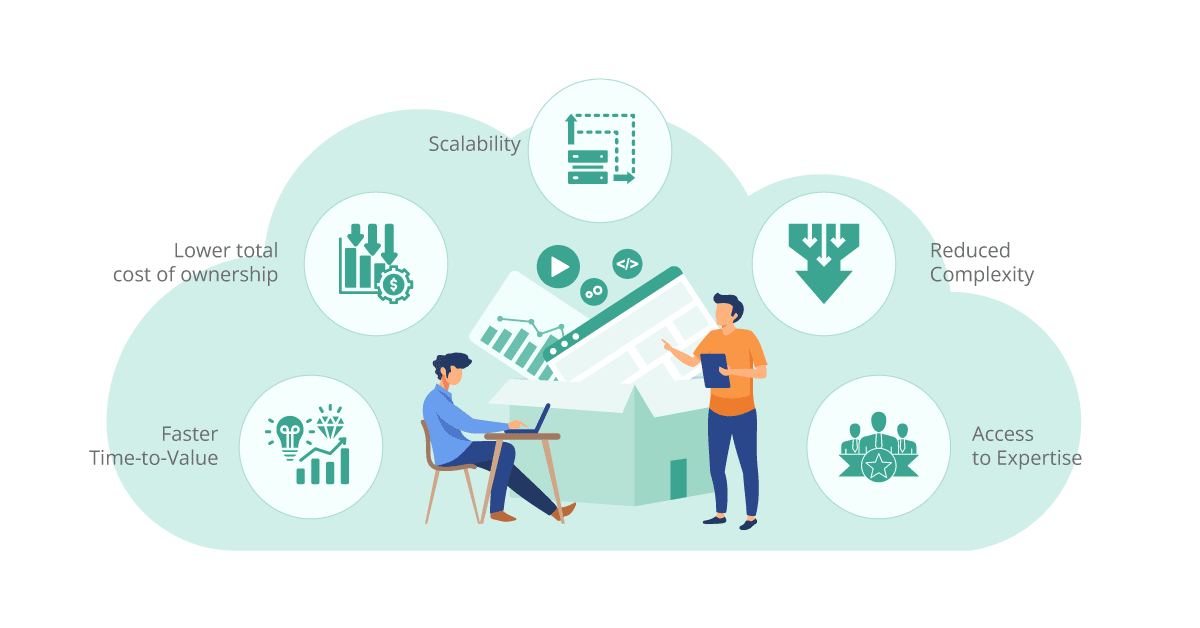
In contrast to the “Build” approach, the “Buy” approach involves purchasing and implementing an iPaaS solution from a vendor rather than building a custom solution in-house. This approach offers several advantages:
Faster Time-to-Value: Purchasing an iPaaS solution allows organizations to start integrating systems and data quickly without the need to develop and build a custom solution from scratch.
Reduced Complexity: iPaaS solutions are designed to be easy to use, with pre-built connectors and APIs that can be configured without extensive development work. This can help reduce the complexity and cost associated with building and maintaining custom integration solutions.
Access to Expertise: Purchasing an iPaaS solution from a vendor provides access to a team of experts who can provide guidance and support throughout the implementation process.
Scalability: iPaaS solutions are built to handle large volumes of data and complex integrations, making them ideal for organizations that need to scale their integration capabilities quickly.
Lower Total Cost of Ownership: While purchasing an iPaaS solution may involve an upfront cost, it can ultimately lead to a lower total cost of ownership compared to building and maintaining a custom solution over time. This is due to factors such as reduced development time, lower maintenance costs, and easier scalability.
What makes iPaaS necessary for today’s transformation projects?
Today’s digital transformation initiatives require a modern, agile approach to integration that can handle the complex requirements of modern systems. Traditional point-to-point integrations are costly to maintain, difficult to enhance or replace, and often result in a “big ball of mud” that makes it hard to keep up with the pace of change in today’s business world.
On the other hand, an iPaaS approach leverages APIs as reusable building blocks within a multi-tiered integration architecture. This decouples each system from the overall integration logic, making it easier to modify, sunset, or swap systems without impacting other integrations. Additionally, iPaaS provides a comprehensive set of tools for developing, deploying, and managing integrations, reducing the complexity of the integration process and accelerating time-to-value. By investing in an iPaaS, organizations can improve their agility and increase the clock speed of their business, delivering greater value to customers and stakeholders.
Here are some examples of how iPaaS can benefit digital transformation projects
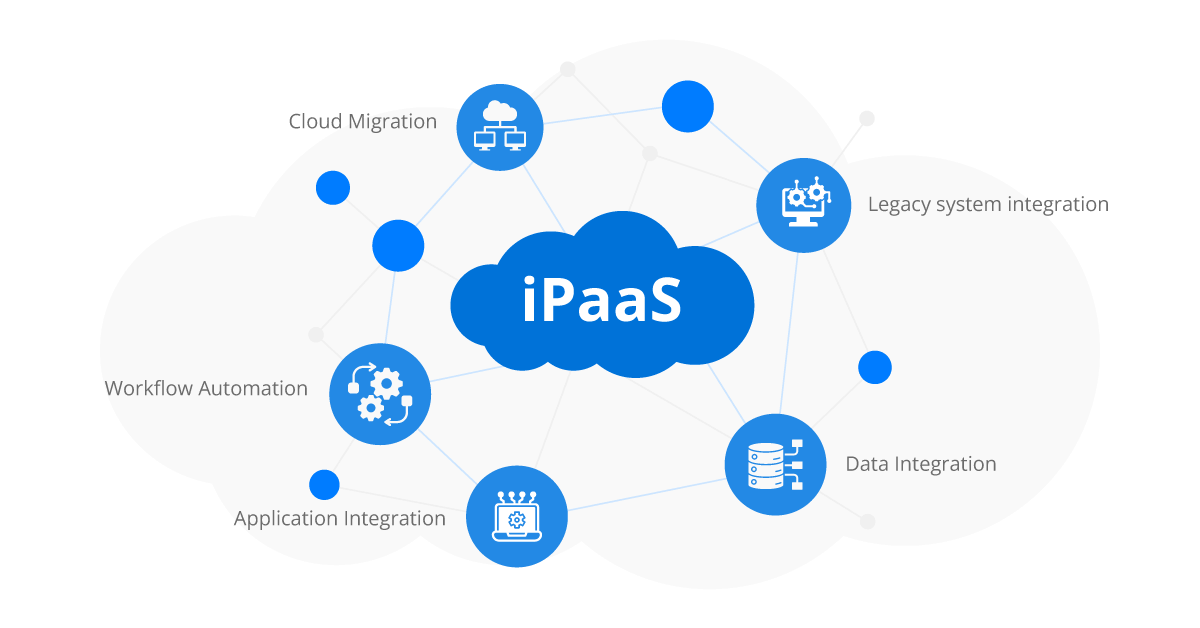
Legacy System Integration: Many organizations have older legacy systems that are not designed for modern, cloud-based environments, and these can become a hurdle in digital transformation. iPaaS can aid in integrating these legacy systems with newer applications and services, thus enabling a seamless digital transformation process. An iPaaS solution can help connect legacy systems and allow them to communicate with modern applications and services using pre-built connectors, APIs, and other integration tools.
Data Integration: Digital transformation often necessitates data from various sources, such as databases, cloud services, and IoT devices. iPaaS can facilitate this process by providing a centralized platform for data integration. Data can be easily extracted, transformed, and loaded into the destination systems using pre-built connectors, APIs, and other integration tools. This can lead to improved data quality, accuracy, and availability across the organization.
Application Integration: Digital transformation initiatives frequently involve developing new applications or integrating existing ones with new services. iPaaS can assist in this integration by providing pre-built connectors and APIs, which can help organizations streamline the development process and speed up time-to-market. This can also enhance the agility of the organization, making it easier to adapt to changes in the business environment.
Workflow Automation: Digital transformation involves automating manual processes to enhance efficiency and reduce errors. iPaaS can aid in automating workflows by providing tools for process orchestration, workflow design, and task automation. These tools allow organizations to create complex workflows that can be executed automatically, resulting in time and cost savings and a more streamlined business process.
Cloud Migration: Many organizations are moving their applications and data to the cloud as part of their digital transformation efforts. iPaaS can help organizations manage cloud migration by providing tools for cloud integration, migration, and management. By leveraging iPaaS, organizations can rapidly and securely migrate their systems to the cloud, ensuring they have access to the latest technologies and can benefit from the cost and operational advantages of cloud computing.
Final thoughts
In today’s digitally connected world, integration is a crucial aspect of any organization’s success. However, traditional point-to-point integrations are difficult to maintain, enhance, or replace, leading to a “big ball of mud” that grows in complexity as new integrations are added. API-led connectivity, as an architectural concept, offers a better solution by using APIs as reusable building blocks within a multi-tiered integration architecture. While APIs have been around for a long time, organizations need the proper tools to implement this approach successfully.
When considering whether to build or buy an API-led connectivity platform, organizations should consider the amount of platform-level development work required for success. Building an integration environment in-house involves mastering several technologies, leading to a steeper learning curve, complex development, and debug scenarios, and large IT investment allocations dedicated to platform code. On the other hand, investing in an API-led connectivity platform allows organizations to leverage a purpose-built platform and accelerate their API-led integration strategy through every phase of the systems development life cycle.
iPaaS is now a critical component for digital transformation initiatives because it helps organizations to modernize their legacy systems and create reusable patterns that improve agility and reduce maintenance expenses. An API-led connectivity Platform offers an effective solution to enterprise integration issues, equipping organizations with the necessary tools to accomplish their digital transformation objectives and accelerate their business processes.
Get Started with Aonflow iPaaS – Free Trial Available!
Build and deploy your integrations at zero cost. No credit card required!