
It’s a fast-paced digital environment, and businesses are constantly seeking innovative solutions to stay ahead of the competition and meet evolving customer demands. One such solution that has emerged as a cornerstone of modern digital strategies is the Integration Platform as a Service or iPaaS in short.
iPaaS plays a pivotal role in driving innovation and supporting agile development methodologies within businesses. By providing a unified platform for integrating diverse applications, data sources, and services, iPaaS empowers organizations to rapidly develop, deploy, and scale innovative solutions. This capability is particularly valuable in today’s dynamic business environment, where agility and speed are crucial for success.
The modern digital landscape is characterized by a proliferation of applications, systems, and data sources, often residing in disparate environments such as cloud, on-premises, and hybrid infrastructures. This complexity can hinder collaboration, innovation, and agility within organizations. iPaaS addresses these challenges by offering a unified integration platform that simplifies connectivity, streamlines data exchange, and accelerates the development of innovative solutions.
iPaaS is a fundamental enabler of innovation and agile development in the modern digital landscape. Its ability to integrate diverse technologies and enable rapid solution deployment makes it an indispensable tool for businesses looking to stay competitive and drive digital transformation.
Get Started with Aonflow iPaaS – Free Trial Available!
Build and deploy your integrations at zero cost. No credit card required!
iPaaS: Agility in Digital Transformation
Organizations are increasingly focusing on both agility and data integration. Agile development practices have transformed the software development lifecycle by promoting flexibility and collaboration. Concurrently, iPaaS solutions have emerged as robust tools for integrating disparate data sources and applications into cohesive systems. The recent introduction of low-code platforms has further simplified and expedited this process. This article delves into how agile development methodologies can effectively manage iPaaS solutions, particularly when implemented through low-code platforms.
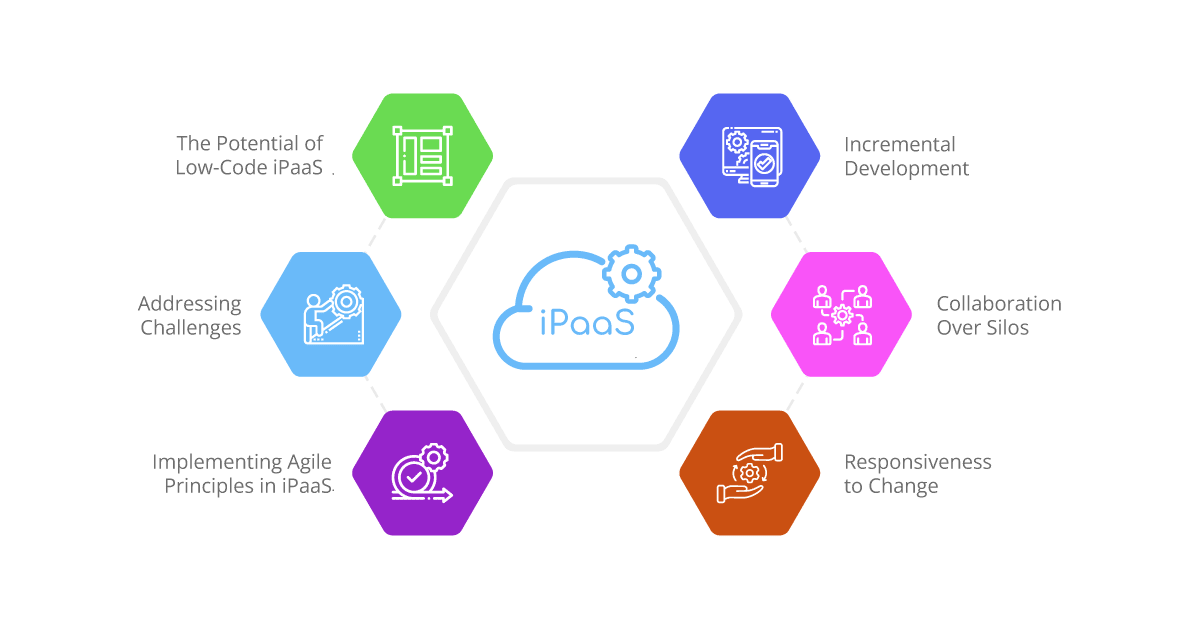
The Potential of Low-Code iPaaS
Low-code platforms offer the promise of swift development cycles and democratize the integration process by allowing non-developers to participate in building and managing integrations. This aligns with the collaborative nature of agile principles, fostering cross-functional teamwork and problem-solving.
Addressing Challenges
Agility in data integration presents its own set of challenges, including concerns about security, data governance, and the risk of creating complex, interconnected systems (“spaghetti” integrations). Embracing agile practices such as iterative development, sprint planning, and regular retrospectives can help organizations navigate these obstacles effectively.
Implementing Agile Principles in iPaaS
When implementing iPaaS solutions, it’s crucial to apply agile principles to the integration process. This involves breaking down integration tasks into smaller, manageable units, prioritizing features based on business value, and continuously iterating based on feedback. Additionally, fostering open communication and collaboration among stakeholders can ensure that the integration process remains aligned with evolving business needs.
By leveraging low-code iPaaS solutions within an agile framework, organizations can enhance their ability to adapt to changing requirements, accelerate time-to-market for new solutions, and maintain the flexibility needed to thrive in today’s dynamic digital landscape.
Incremental Development
Agile principles advocate for incremental, iterative integration rather than attempting to integrate all systems simultaneously. This approach allows organizations to learn from each integration cycle, making adjustments before moving on to the next sprint. By breaking down the integration process into manageable increments, teams can address challenges and refine their approach based on real-world feedback, ultimately leading to more effective and reliable integrations.
Collaboration Over Silos
Agile development emphasizes intense collaboration between cross-functional teams. When applied to iPaaS, this principle extends to involving stakeholders from business, IT, and data governance right from the initial stages of integration projects. This collaborative approach ensures that all stakeholders have a voice in the integration process, leading to solutions that are aligned with business goals and requirements.
Responsiveness to Change
Agile development’s core tenet of responsiveness to change is particularly relevant when managing integrations in a low-code environment. Low-code platforms enable quick changes to be made to integrations, and an agile approach ensures that the system can adapt to new requirements efficiently. By embracing change as a natural part of the development process, organizations can maintain the flexibility needed to respond to evolving business needs and market conditions.
iPaaS: The Foundation of Agile Development
In the space of software development, agility is key to success. Agile methodologies emphasize iterative development, collaboration, and flexibility, enabling teams to respond quickly to changing requirements and deliver high-quality software at a rapid pace. iPaaS serves as a foundational element in enabling agile development practices by providing seamless integration and deployment capabilities.
How iPaaS Enables Rapid Integration and Deployment
iPaaS revolutionizes the integration landscape by providing a comprehensive set of tools and capabilities that streamline the entire integration lifecycle. One of the key ways iPaaS achieves this is through its extensive library of pre-built connectors, templates, and workflows. These pre-built components are designed to seamlessly connect with a wide range of applications, databases, and APIs commonly used in modern enterprise environments. By leveraging these pre-built assets, development teams can significantly reduce the time and effort required to establish connections between disparate systems, applications, and data sources.
The use of pre-built connectors eliminates the need for custom integration code, which traditionally requires a substantial investment of time and resources. Instead, developers can simply select the relevant connectors from the iPaaS library and configure them to suit their specific integration requirements. This not only accelerates the integration process but also reduces the risk of errors and inconsistencies that often arise from manual coding.
In addition to pre-built connectors, iPaaS platforms often provide a rich set of templates and workflows that encapsulate best practices for common integration scenarios. These templates serve as starting points for building integrations, allowing developers to leverage proven patterns and configurations without starting from scratch. As a result, development teams can rapidly assemble complex integration solutions by combining and customizing these pre-defined templates, further accelerating the deployment of new integrations.
One of the most compelling features of iPaaS platforms is their intuitive visual development tools and drag-and-drop interfaces. These user-friendly interfaces empower developers of varying skill levels to create, modify, and test integrations through a graphical interface, without the need for extensive coding knowledge. This democratization of integration development not only fosters collaboration between technical and non-technical stakeholders but also enables rapid prototyping and iteration, crucial aspects of agile development methodologies.
Growth of iPaaS Adoption in Agile Environments
In recent years, the adoption of iPaaS in agile environments has seen a significant uptick, fueled by the demand for faster and more efficient integration solutions. Industry reports and market analyses have highlighted this trend, projecting substantial growth in the iPaaS market. Experiencing a substantial projected CAGR of 25.97% from 2022 to 2027 and a noteworthy surge of US$10,258.74 million, this market stands as a key player in driving solutions for all enterprises and businesses that leverage its full potential. Organizations across diverse industries are increasingly recognizing the value of iPaaS in facilitating agile development practices and are consequently investing in these solutions to bolster their integration capabilities.
The iPaaS market’s growth trajectory is supported by compelling statistics that underscore its relevance and adoption. For instance, studies have indicated a rising number of businesses incorporating iPaaS into their technology stack to streamline their integration processes. This trend is driven by the need to enhance operational efficiency, respond more effectively to changing market dynamics, and deliver innovative solutions to customers at an accelerated pace.
Furthermore, iPaaS adoption is not limited to specific industries but is rather a widespread phenomenon cutting across various sectors. This broad adoption is indicative of iPaaS’s versatility and applicability in addressing diverse integration challenges faced by organizations in different domains. Whether in healthcare, finance, manufacturing, or retail, iPaaS is increasingly recognized as a crucial enabler of agile development methodologies.
iPaaS adoption is not merely a short-term trend but rather a strategic imperative for organizations looking to future-proof their operations. As the digital landscape continues to evolve rapidly, businesses are seeking agile and adaptable solutions that can scale alongside their growth. iPaaS’s ability to facilitate seamless integration and support agile development principles positions it as a cornerstone of digital transformation strategies, driving its sustained growth and adoption across industries.
Aonflow is the leading integration platform.
You can kick-start by integrating your first-ever workflow in just a matter of minutes.
iPaaS and Business Agility
In today’s rapidly evolving business landscape, agility is essential for organizations to respond effectively to market changes, customer demands, and competitive pressures. Integration Platform as a Service (iPaaS) plays a pivotal role in enabling organizational agility by providing a flexible and scalable framework for integrating applications, data sources, and systems. This section explores how iPaaS contributes to organizational agility, improves time-to-market, and fosters responsiveness, supported by real-world examples of businesses that have achieved agility through iPaaS adoption.
Contributions of iPaaS to Organizational Agility
iPaaS facilitates organizational agility by simplifying and accelerating the integration of diverse applications and data sources. By providing a unified platform for data exchange and communication, iPaaS enables organizations to adapt quickly to changing business requirements, technological advancements, and market dynamics. This agility is crucial for organizations seeking to innovate, expand their offerings, and remain competitive in dynamic market environments.
Improved Time-to-Market and Responsiveness with iPaaS
One of the key benefits of iPaaS is its ability to reduce time-to-market for new products, services, and features. By streamlining the integration process, iPaaS enables organizations to rapidly develop and deploy innovative solutions, gaining a competitive edge by being first to market. Furthermore, iPaaS empowers organizations to respond quickly to customer feedback, market trends, and emerging opportunities, ensuring that they remain responsive and agile in meeting evolving demands.
iPaaS in Action: Industry Use Cases
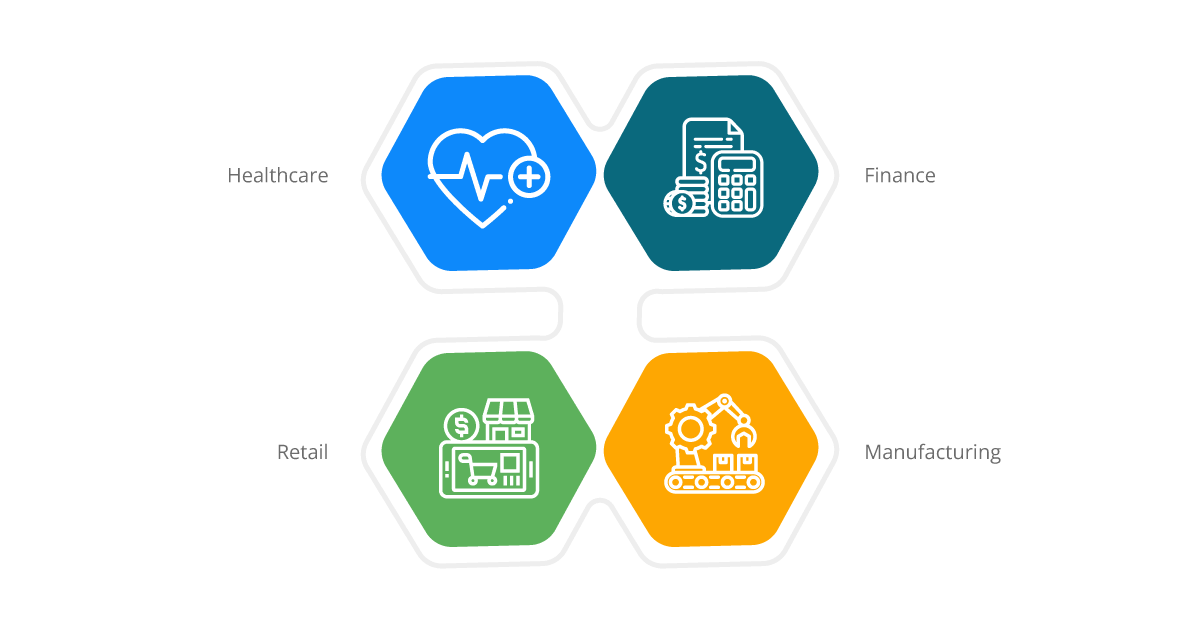
Healthcare: Improving Patient Care through Integrated Data Platforms
In the healthcare industry, iPaaS has been instrumental in improving patient care by facilitating the integration of disparate data sources and applications. For example, a hospital or healthcare provider might use iPaaS to integrate electronic health records (EHR) systems with patient monitoring devices, laboratory information systems, and billing systems. This integration enables healthcare professionals to access comprehensive patient data in real-time, leading to more informed decision-making, improved care coordination, and better patient outcomes. Additionally, iPaaS can help healthcare organizations comply with regulatory requirements such as HIPAA by ensuring the secure and compliant exchange of sensitive patient information.
Retail: Enhancing Customer Experience with Unified Omnichannel Data
In retail, iPaaS has been widely adopted to enhance the customer experience by enabling the seamless integration of data across various channels, including online and offline sales, customer relationship management (CRM) systems, inventory management systems, and marketing platforms. By unifying omnichannel data, retailers can gain a 360-degree view of their customers, personalize marketing efforts, optimize inventory levels, and deliver a consistent and cohesive experience across all touchpoints. This level of integration empowers retailers to meet customer expectations for seamless shopping experiences, thereby improving customer satisfaction and loyalty.
Finance: Streamlining Operations and Compliance through Integrated Systems
The finance industry relies on iPaaS to streamline operations, improve efficiency, and ensure compliance with regulatory requirements. iPaaS can be used to integrate core banking systems, customer data platforms, risk management systems, and compliance solutions, enabling financial institutions to automate processes, reduce manual errors, and enhance data accuracy. By integrating these systems, financial organizations can achieve greater operational efficiency, faster transaction processing, and better risk management, ultimately leading to improved customer service and regulatory compliance.
Manufacturing: Optimizing Supply Chain with Real-time Data Integration
In manufacturing, iPaaS plays a crucial role in optimizing supply chain operations by enabling real-time data integration across production systems, inventory management systems, supplier databases, and logistics platforms. This integration allows manufacturers to gain visibility into their supply chain processes, track inventory levels, monitor production performance, and respond quickly to changes in demand or supply. By leveraging iPaaS for supply chain integration, manufacturers can reduce lead times, minimize stockouts, improve production planning, and ultimately enhance their competitiveness in the market.
These highlight the role of iPaaS solutions in driving operational efficiency, improving customer experiences, ensuring regulatory compliance, and enabling organizations to thrive in today’s interconnected business environment. As iPaaS continues to evolve, its potential to transform industries and drive innovation will only grow, making it an indispensable tool for organizations seeking to stay ahead in the digital age.
Emerging Trends in iPaaS Technology
The landscape of Integration Platform as a Service (iPaaS) is continually evolving, driven by technological advancements and changing business needs. Several emerging trends are shaping the future of iPaaS technology. For instance, there is a growing emphasis on AI and machine learning capabilities within iPaaS platforms, enabling intelligent data mapping, transformation, and predictive analytics. Additionally, the rise of event-driven architectures and microservices is influencing iPaaS design, allowing for greater flexibility and scalability in integration solutions. Moreover, the adoption of iPaaS in hybrid and multi-cloud environments is becoming increasingly prevalent, necessitating support for diverse deployment models and cloud-native integrations.
Predictions for the Future of iPaaS in Innovation and Agile Development
Looking ahead, iPaaS is poised to play an even more significant role in driving innovation and supporting agile development methodologies. As businesses continue to embrace digital transformation, iPaaS will become a critical enabler of innovation, providing the integration backbone for emerging technologies such as IoT, blockchain, and edge computing. Furthermore, iPaaS platforms will evolve to offer more comprehensive capabilities for API management, data governance, and security, ensuring that organizations can effectively manage their expanding integration needs while maintaining compliance and data privacy. Additionally, iPaaS will increasingly focus on enabling real-time, event-driven integrations to support dynamic business processes and enable faster decision-making.
How Organizations Can Prepare for the Next Phase of iPaaS Evolution
To prepare for the next phase of iPaaS evolution, organizations should consider several key strategies. Firstly, they should assess their current integration capabilities and identify areas for improvement or modernization. This may involve evaluating their existing iPaaS solutions and determining whether they meet their evolving business needs. Secondly, organizations should stay abreast of emerging iPaaS trends and technologies to ensure that they are well-positioned to adopt new capabilities as they become available. This may involve engaging with industry analysts, attending conferences, and networking with peers to gain insights into best practices and emerging trends. Thirdly, organizations should prioritize agility and flexibility in their iPaaS strategies, ensuring that their integration solutions can adapt to changing business requirements and technological advancements. This may involve adopting agile development methodologies, embracing cloud-native architectures, and investing in training and upskilling for their IT teams.
In conclusion, iPaaS is evolving rapidly to meet the demands of today’s digital economy, and organizations that can adapt to these changes will be well-positioned to drive innovation and achieve competitive advantage. By staying informed about emerging trends, adopting agile and flexible integration strategies, and investing in the right technology and talent, organizations can prepare for the next phase of iPaaS evolution and capitalize on its potential to transform their businesses.
Get Started with Aonflow iPaaS – Free Trial Available!
Build and deploy your integrations at zero cost. No credit card required!